
Chantal knew the sound of kindness before she ever knew the safety of a real home.
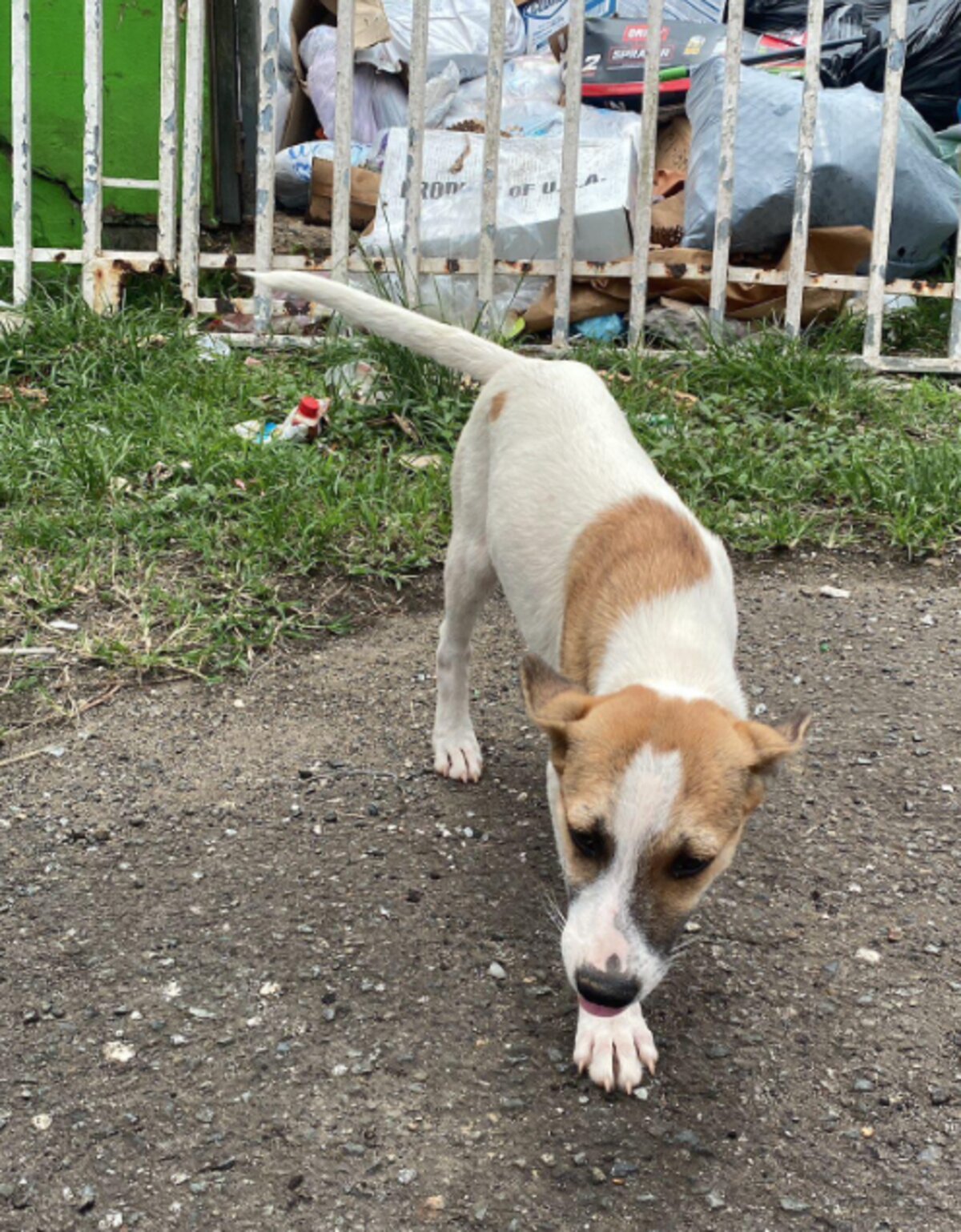
On the streets of Patillas, Puerto Rico, the gentle white-and-brown dog had become part of a daily routine built around survival. Yesenia Pacheco Morales and other volunteers traveled familiar routes to feed stray dogs who depended on them, and Chantal was one of the dogs who almost always appeared when food arrived. She was not just another face in the pack. She was known. She was expected. She was the kind of dog who made volunteers look for her automatically because she had learned that those visits meant someone still cared whether she ate that day.
That is why her sudden absence felt wrong immediately.
For stray dogs, missing a meal can mean many things, and almost none of them are comforting. A dog may be sick, injured, trapped, chased away, or picked up by someone with no good intentions. Chantal had never been the kind of dog to casually skip the one dependable part of her day. When she stopped showing up, Morales grew nervous. Days passed with no sign of her, and the question hanging over the route became heavier each time the volunteers looked around and did not see her.
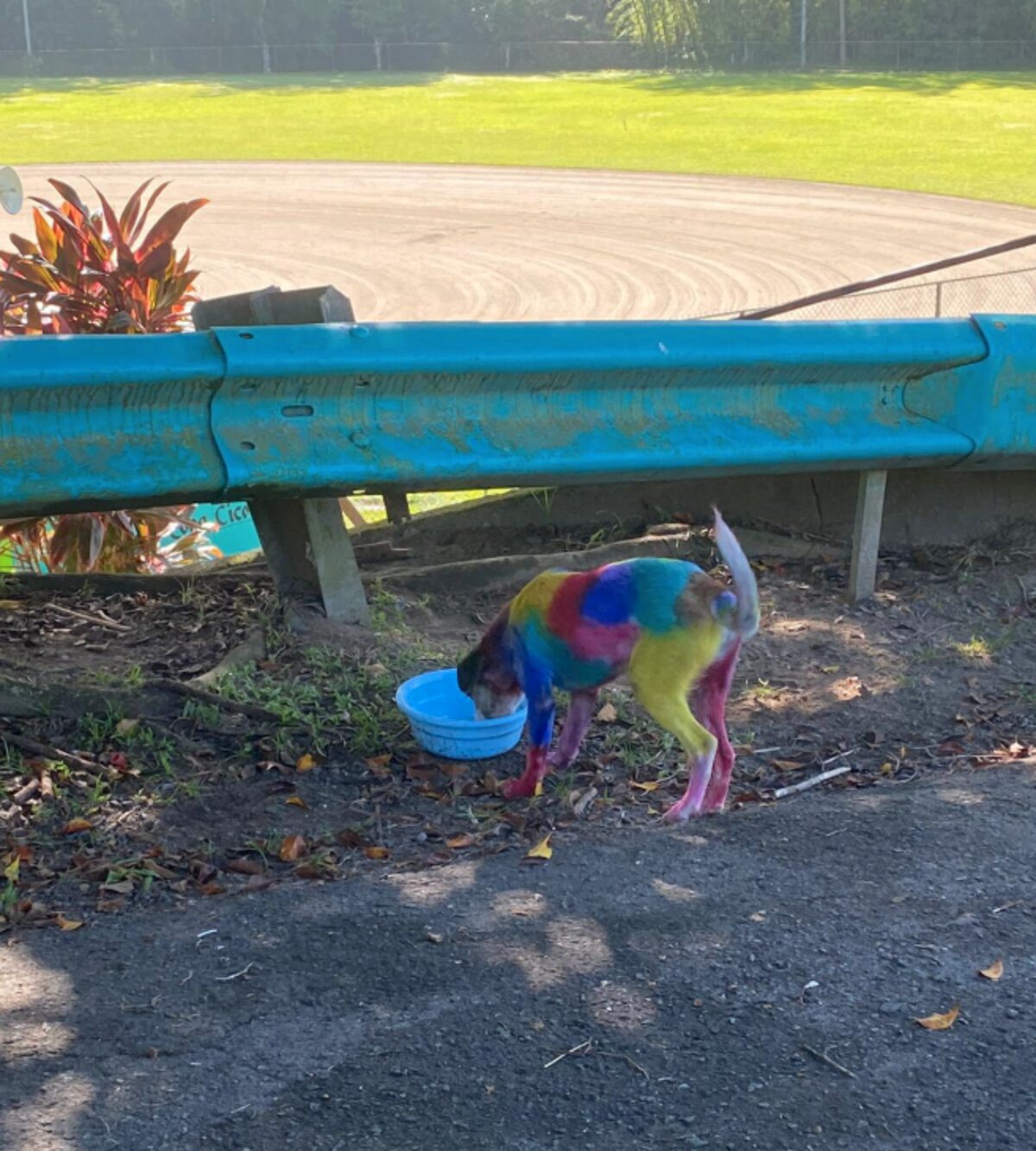
Then Chantal returned.
But she did not come back the way she had left.
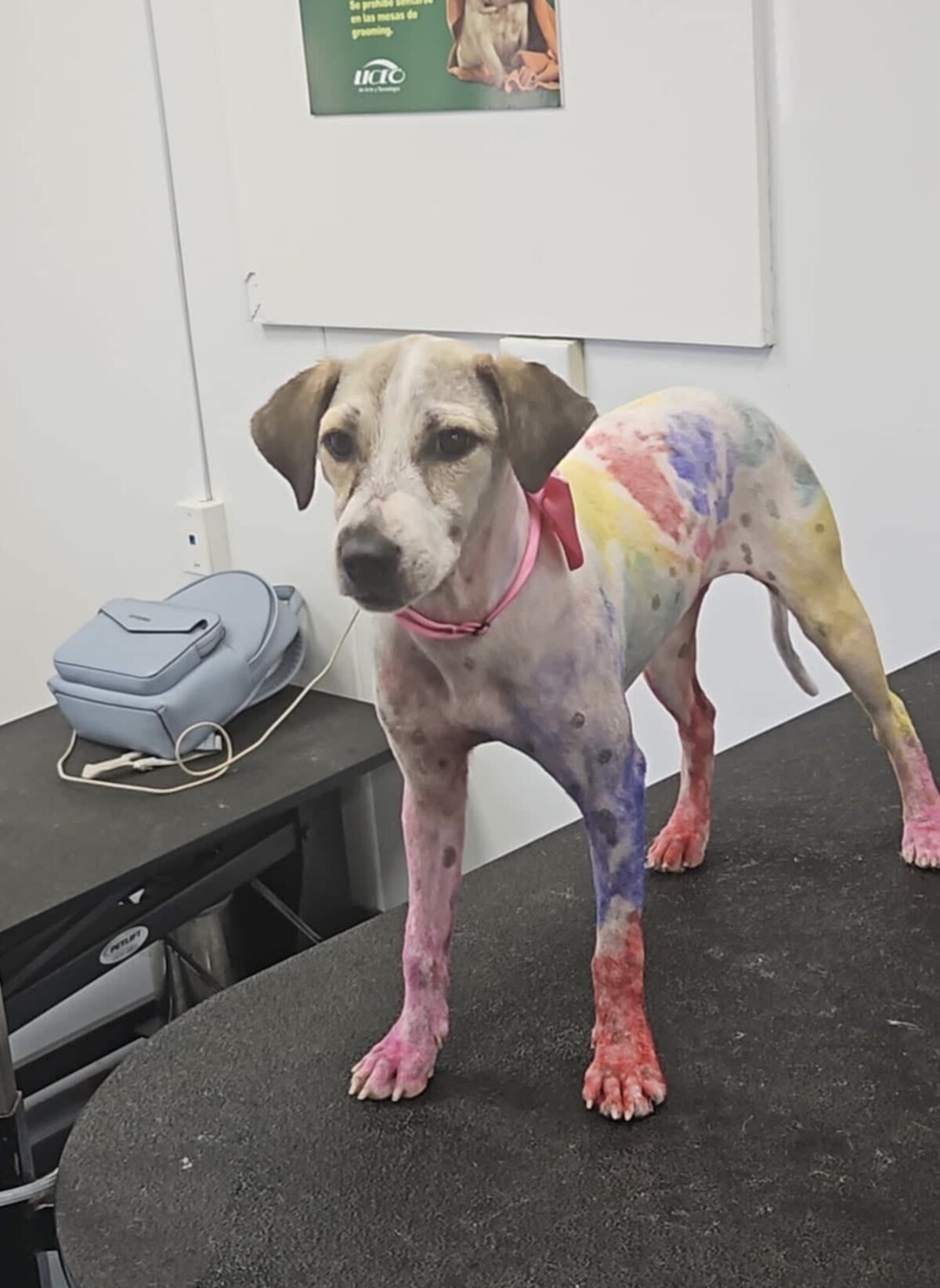
When Morales saw her again, the dog was shaking in fear. Bright colors covered her body. Her white and brown fur had been smeared with rainbow paint, and the sight was so shocking that it took a moment to understand what had happened. This was not a harmless stain from a dog rolling somewhere messy. Someone had deliberately covered her in paint. The colors were loud, almost cartoonish, but nothing about Chantal’s body language looked playful. She was frightened, trembling, and visibly changed by whatever she had endured while she was gone.
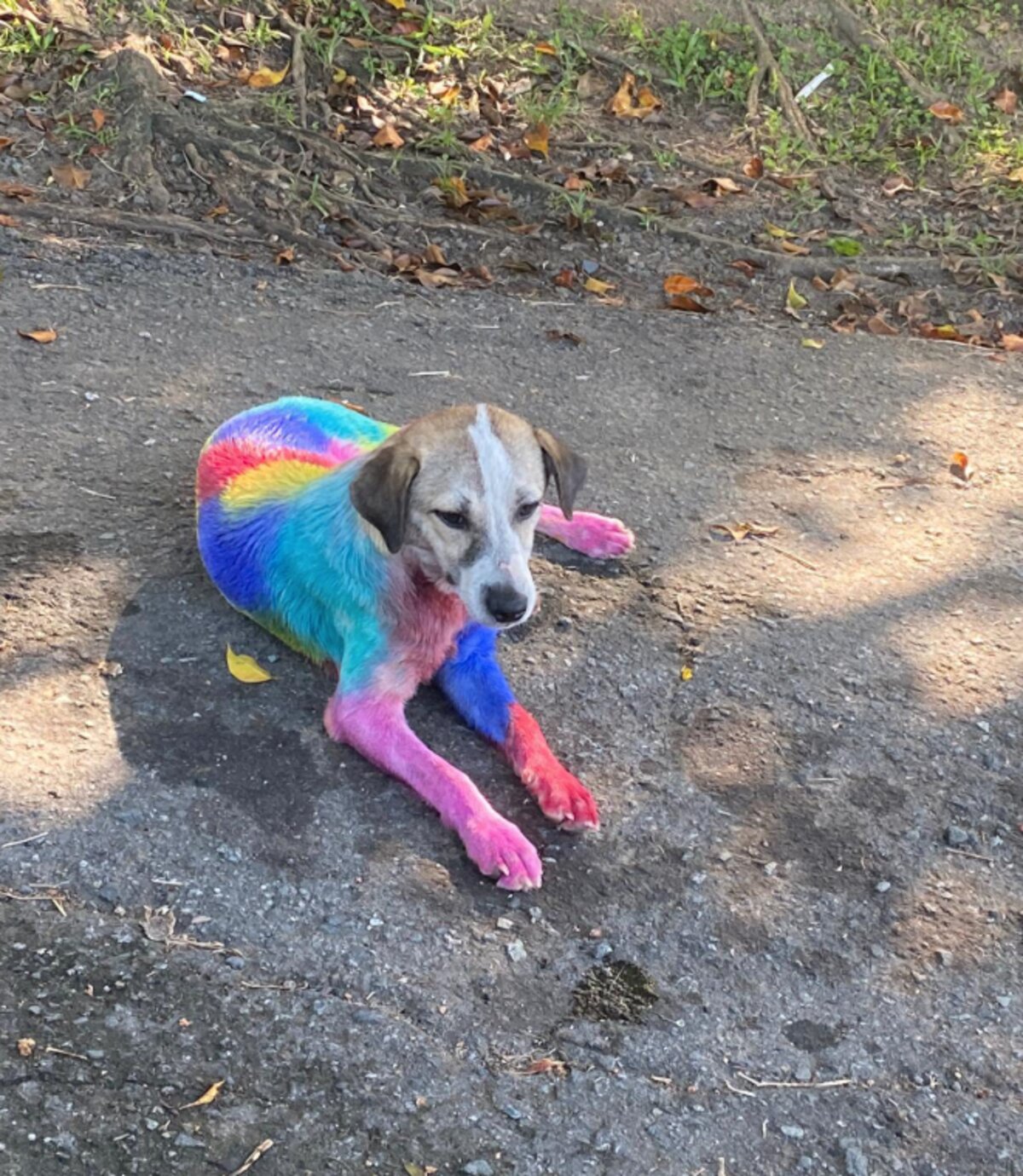
Morales later described the moment as a mix of sadness, anger, disappointment, and despair. She cried when she saw Chantal that way. The dog who had once come happily for food now seemed terrified, as if the people around her had become harder to trust. One look at her eyes was enough for Morales to believe that Chantal had not chosen this. Something had been done to her, and the dog could not explain where she had been or who had hurt her.
The paint itself became another source of worry. Morales wrote about Chantal’s ordeal on Facebook and later said an art professor confirmed that the substance was not meant for dyeing hair or fur. It was not the sort of safe, temporary coloring sometimes used by groomers or pet owners. Morales told a local news station that the paint felt sticky and had hardened into Chantal’s coat. She believed the substance may have been toxic.
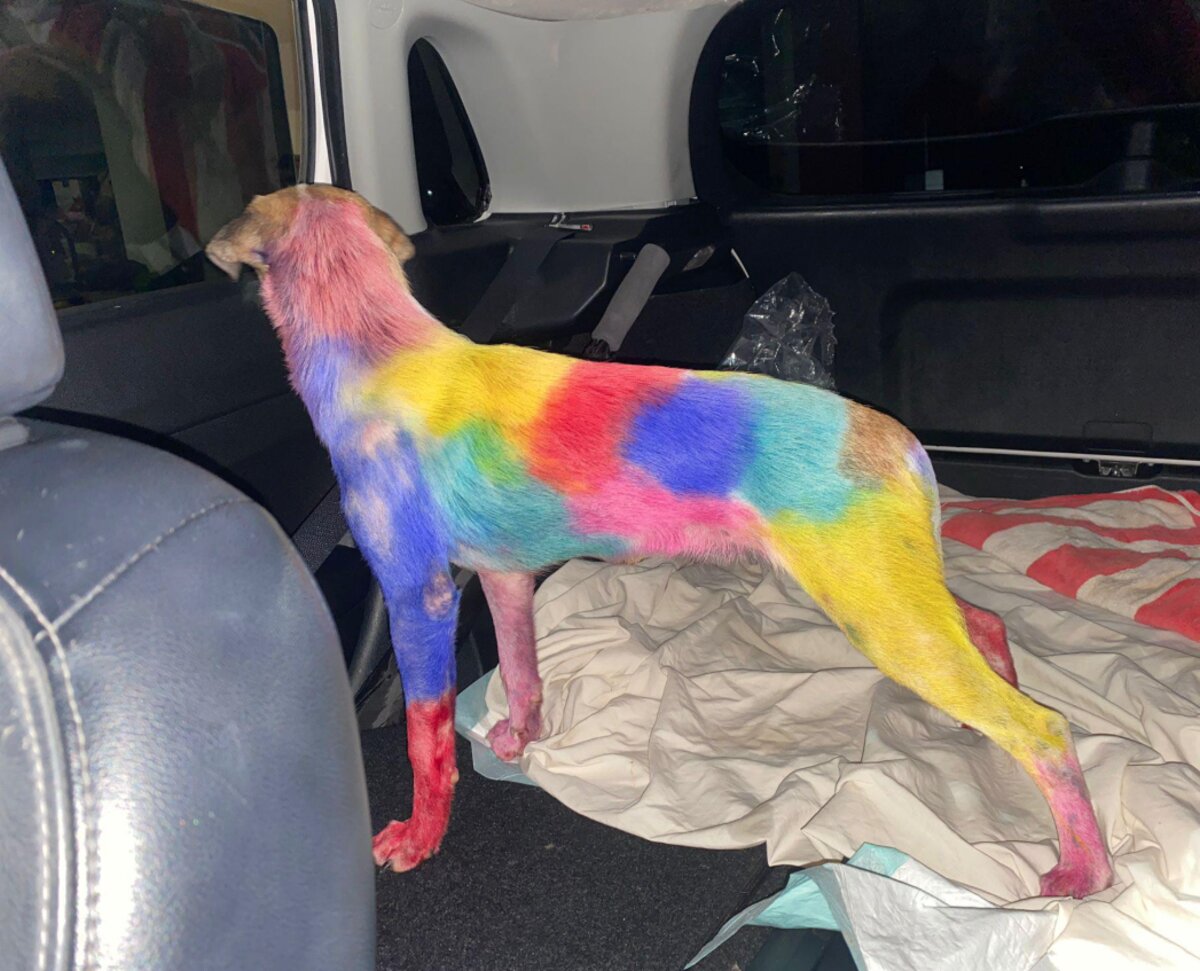
As rescuers looked more closely, the physical damage became clearer. Chantal’s skin was irritated. Morales said the dog had an allergic rash that was red, scaly and very itchy. The bright paint was not just ugly or humiliating. It appeared to be causing real discomfort, and because it had hardened into her fur, removing it was not as simple as washing away dirt.
The first bath did not make everything disappear. Even after Chantal was cleaned, her fur and skin remained stained with color. The volunteers had to give her a haircut to remove as much of the hardened material as they could. For a street dog who had already been frightened enough to tremble, being handled, bathed and clipped after such an ordeal could have been another terrifying experience. But the people around her were trying to undo the damage as carefully as they could.
Chantal also needed medical support. According to Morales, she was given antibiotics and antihistamines to prevent infection and help with itching and inflammation. Volunteers used moisturizer to soothe her skin. Each small act of care was a quiet answer to the cruelty she had just survived. Someone had treated her body like a canvas. Now other people were treating her like a living, hurting dog who deserved relief.
The most important decision came after the bath.
Instead of sending Chantal back to the same streets where she had disappeared, a volunteer took her home. That choice changed the meaning of her rescue. She was not just cleaned and returned to the place where something terrible had happened to her. She was given somewhere to rest, somewhere to be watched, somewhere her body could heal without the daily pressure of surviving outdoors.
In that home, Chantal was allowed to feel safe again.
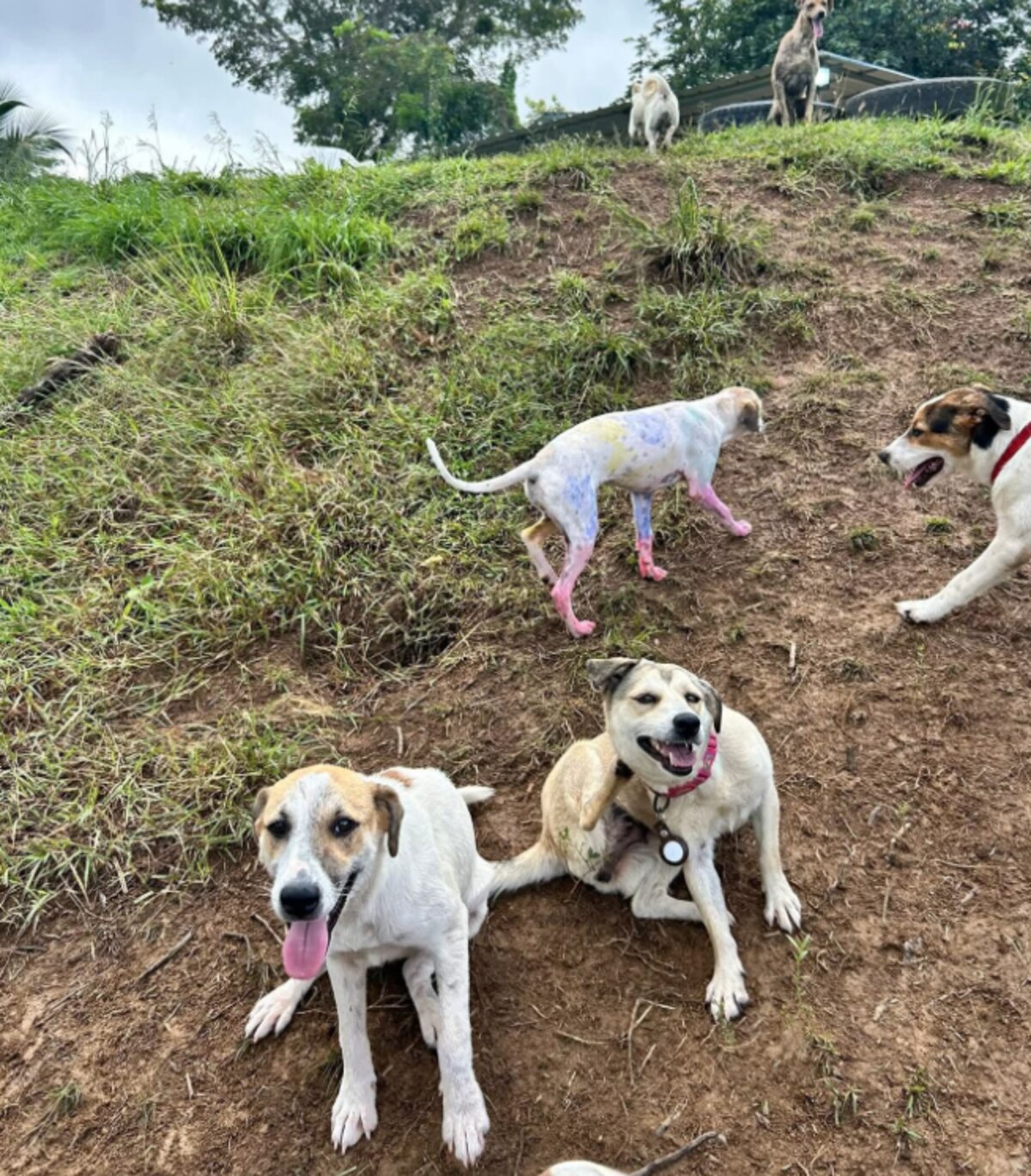
Slowly, the dog Morales remembered began to come back. The fear that had followed her home did not define her forever. With care, comfort and patience, Chantal started to become the happy, loving pup she had been before the paint. She explored. She played with other dogs. She began to enjoy the simple things that had been taken from her for a while: movement, companionship, rest, and the feeling that nearby humans were not there to harm her.
Her story also traveled far beyond the feeding route in Puerto Rico. People saw what had happened to her and responded not only with outrage, but with love. One family in Pennsylvania learned about Chantal and decided they wanted to adopt her. Even better, they planned to adopt two dogs from Puerto Rico, meaning Chantal would not have to begin her new life completely alone. She would have a friend from home with her as she left behind the place where she had been hurt.
For Morales and the volunteers, Chantal’s recovery became a reminder of both sides of rescue work. They see how cruel people can be, but they also see how quickly a frightened dog can begin to heal when the right people step in. Chantal’s body had been covered in colors that represented someone else’s cruelty, but the end of her story belonged to the people who refused to let that cruelty be the final thing anyone saw in her.
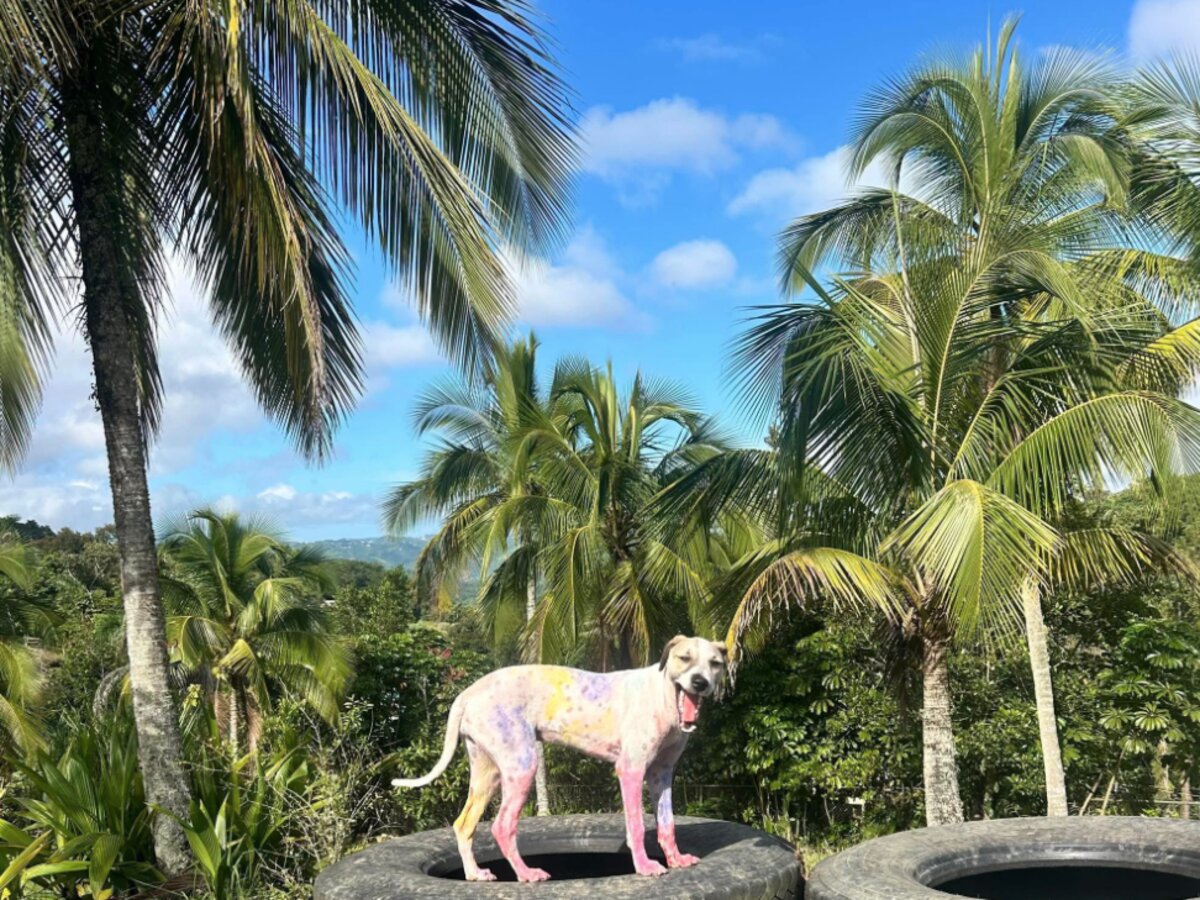
The paint faded. The fear softened. And the dog who once trembled on the street finally got the chance to be known for something other than what was done to her.
Source: Original reporting