
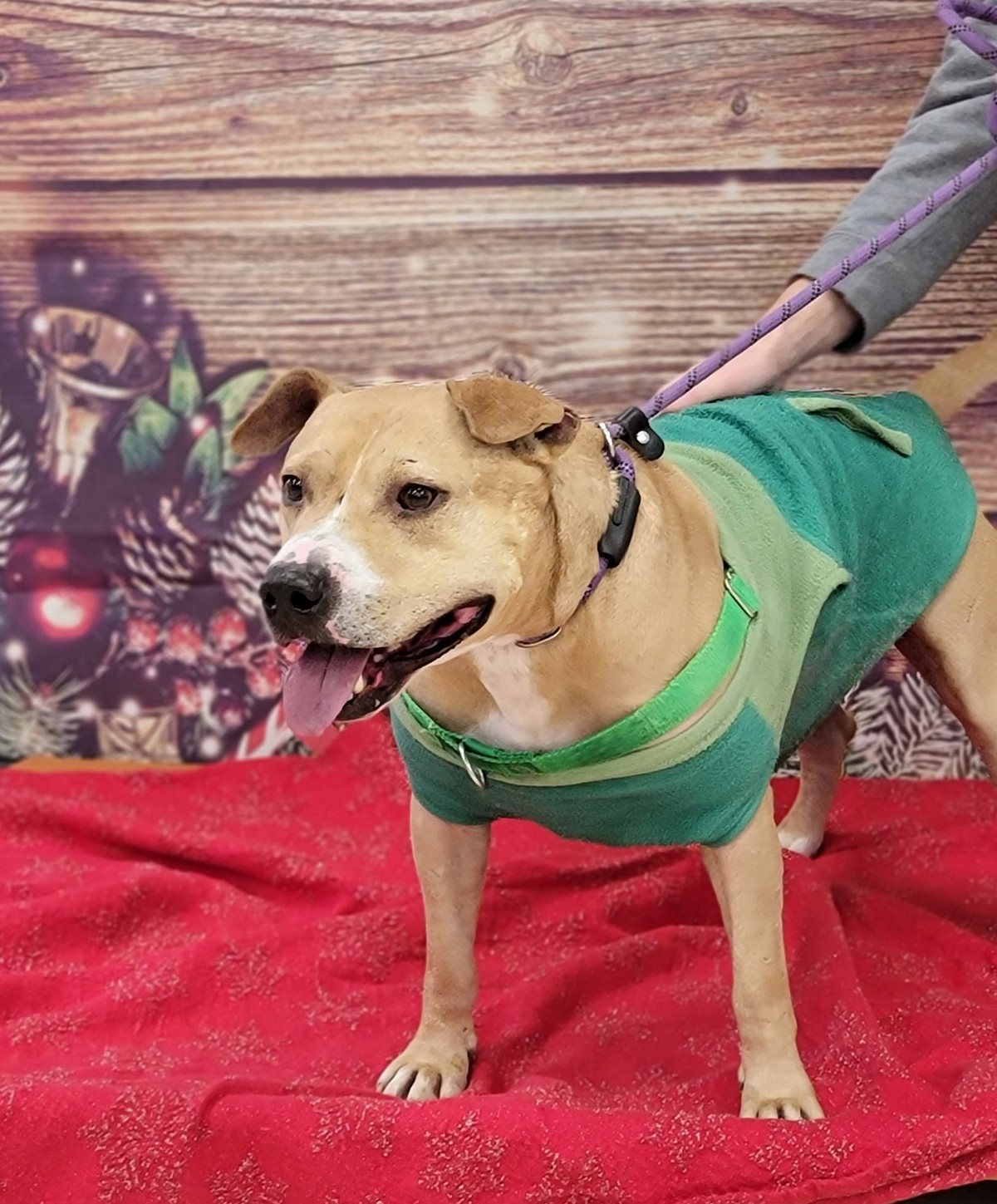
Some dogs arrive at a shelter carrying the weight of everything they have survived.
Green was one of them.
He came to the Pennsylvania SPCA after rescuers removed him from a dog fighting operation alongside 32 other dogs.
Also readHe Was Broken and Alone — Until One Gentle Dog Refused to Leave His Side
What those dogs endured was heartbreaking, but Green still seemed to hold onto hope.
Many of the other rescued dogs found homes fairly quickly.
Green did not.
He stayed at the shelter as days turned into months, and months stretched into more than two years.
That kind of wait could have changed him, but it never seemed to take away his softness.
The reason had little to do with his real personality.
It had far more to do with what people assumed when they saw him.
Because Green was a Pitbull, many strangers decided he must be dangerous or aggressive before they ever met him.
They saw the breed first and the dog second.
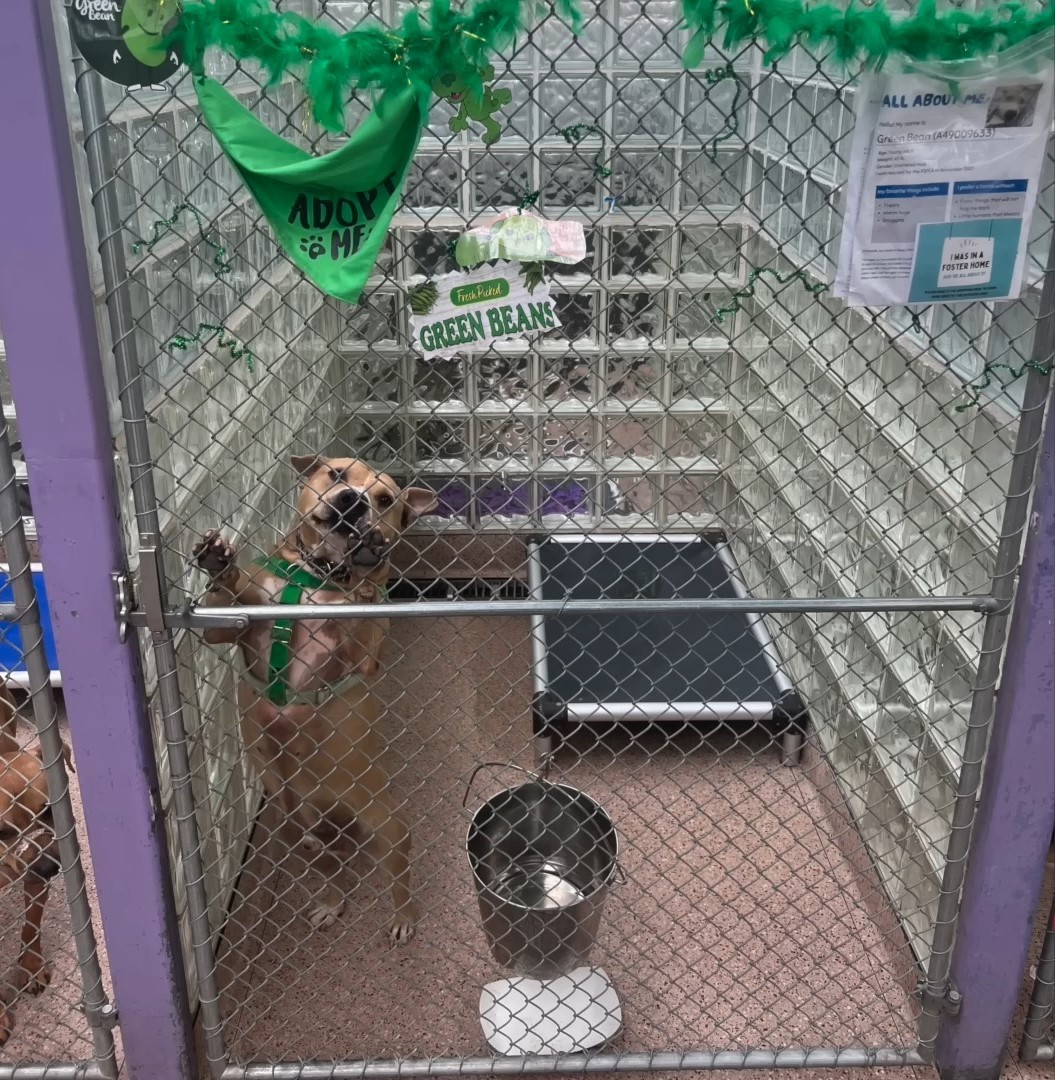
So they missed who he really was.
They missed a sweet, gentle, affectionate dog who wanted badly to be loved.
They missed the calm spirit behind the stereotypes.
They missed the smile that kept showing up anyway.
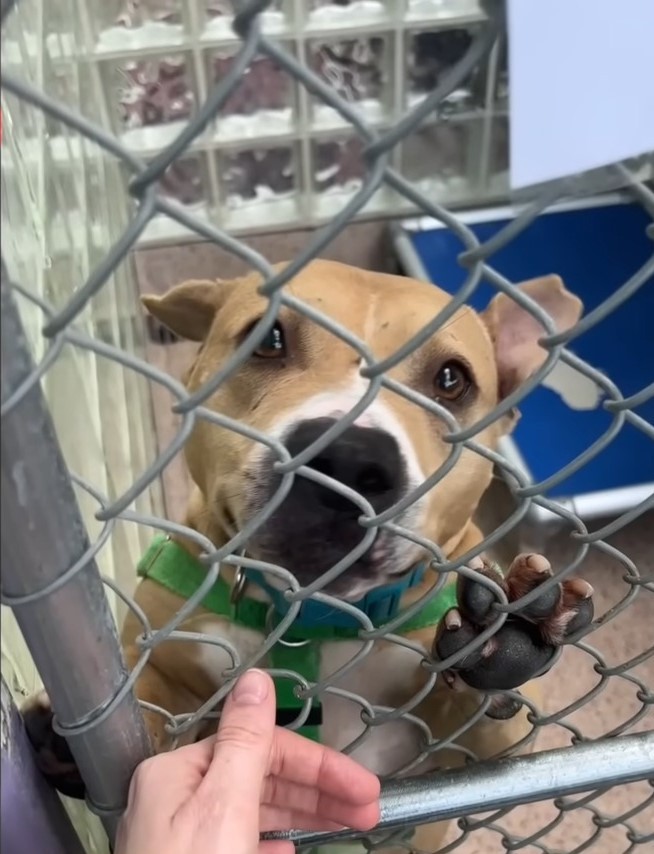
Even after being passed over again and again, Green kept greeting people with hope.
He waited at his kennel door, tail wagging, as if the right person might finally stop.
Rachel, a volunteer at the Pennsylvania SPCA, was one of the people who did stop.
From the moment she met Green, she saw his softness right away.
Their bond formed quickly.
Rachel knew his long shelter stay was not about bad behavior.
It was about stigma tied to his breed and his past.
To her, Green was an ideal dog in every other sense.
She told GeoBeats Animals that he was always smiling for anybody, which made his two years in the shelter feel almost impossible to understand.
An animal can spend so long waiting and still greet people joyfully, but hearing it about Green makes it especially striking.
After everything he had lived through, he still stayed happy to see people.
Rachel described his greeting as simple and unforgettable.
He would walk up, wag his tail, and literally smile.
That smile became part of what made him so special to the people who truly knew him.
It showed that his heart had stayed open.
It showed that cruelty had not erased his ability to trust.
It also made his long wait feel even more unfair.
Over the course of those two years, Rachel became a steady presence in his life.
She took him outside for walks whenever she could.
Those walks clearly meant a lot to him.
On a leash, Green was calm and relaxed.
He seemed to soak in every bit of fresh air, freedom, and quiet.
Rachel also pushed back against the fear people attached to him.
She said people kept judging and calling him scary, but she never felt unsafe with him, ever.
That honesty mattered.
It came from someone who spent real time with him, not someone making guesses from a distance.
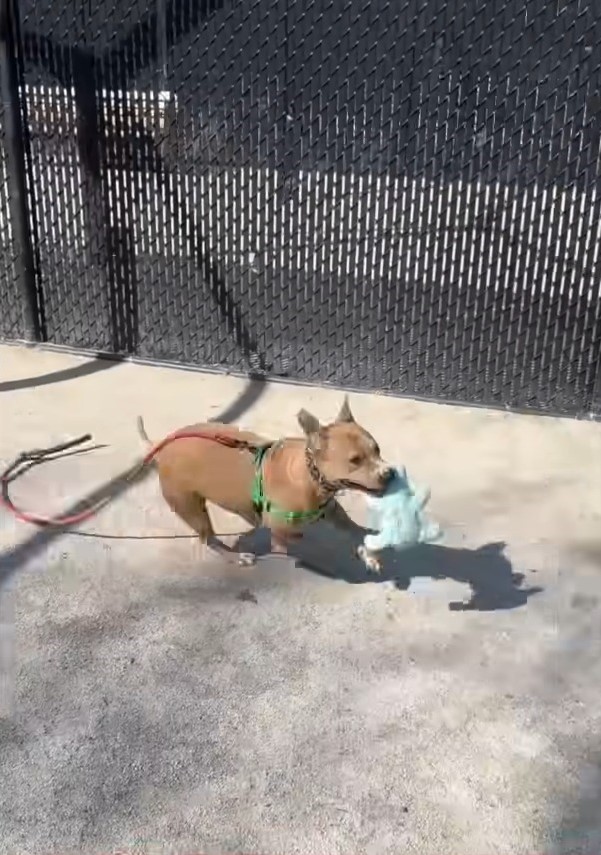
Green also had a playful side that was impossible to miss.
When toys appeared, he lit up with excitement.
Rachel compared his joy to a kid on Christmas morning.
For Green, happiness was wonderfully simple.
A toy in his mouth and a person willing to share the moment could make his whole face shine.
That image says everything about the dog he really was.
He did not seem guarded.
He did not seem menacing.
He seemed like a dog thrilled by a small kindness and eager to share a happy minute with someone nearby.
That was the tragedy of his long wait.
He did not need anything extravagant.
He just needed someone to give him a fair chance.
Rachel understood that Green was living proof of how misunderstood Pitbulls can be.
She said many people do not give dogs like him a chance because they are afraid.
People hear the breed name and assume aggression instead of getting to know the individual dog.
In Green’s case, that fear cost him time.
It cost him opportunities.
It cost him more than two years of the home he should have had much sooner.
Still, he kept hoping.
There is something especially moving about a dog who remains openhearted after so much disappointment.
Green kept showing up with that same patient optimism every day.
He kept standing at the kennel door.
He kept wagging his tail.
He kept smiling at whoever came near.
For shelter workers and volunteers, that kind of consistency can be impossible to forget.
They see dogs on their hardest days, and they also see the tiny rituals that reveal who each dog truly is.
Green’s ritual was that hopeful greeting.
He kept offering warmth to a world that had not yet made room for him.
That made people like Rachel believe even more strongly that his turn had to come.
She had always known Pitbulls were deeply misunderstood, and Green made that truth personal.
He was not a stereotype standing behind kennel bars.
He was a real dog with a gentle nature, a calm leash manner, and a clear love of people.
He was the kind of dog who should have been easy to imagine in a home.
Yet for a very long time, imagination failed the people passing by.
They looked, judged, and moved on.
Green stayed behind and waited for someone who would do more than glance.
Then, after all that waiting, the moment finally came.
A family stepped forward and chose him.
They were ready to offer the love, care, treats, and toys he had been missing for so long.
For Rachel, it was everything she had wanted for him.
It was also emotional.
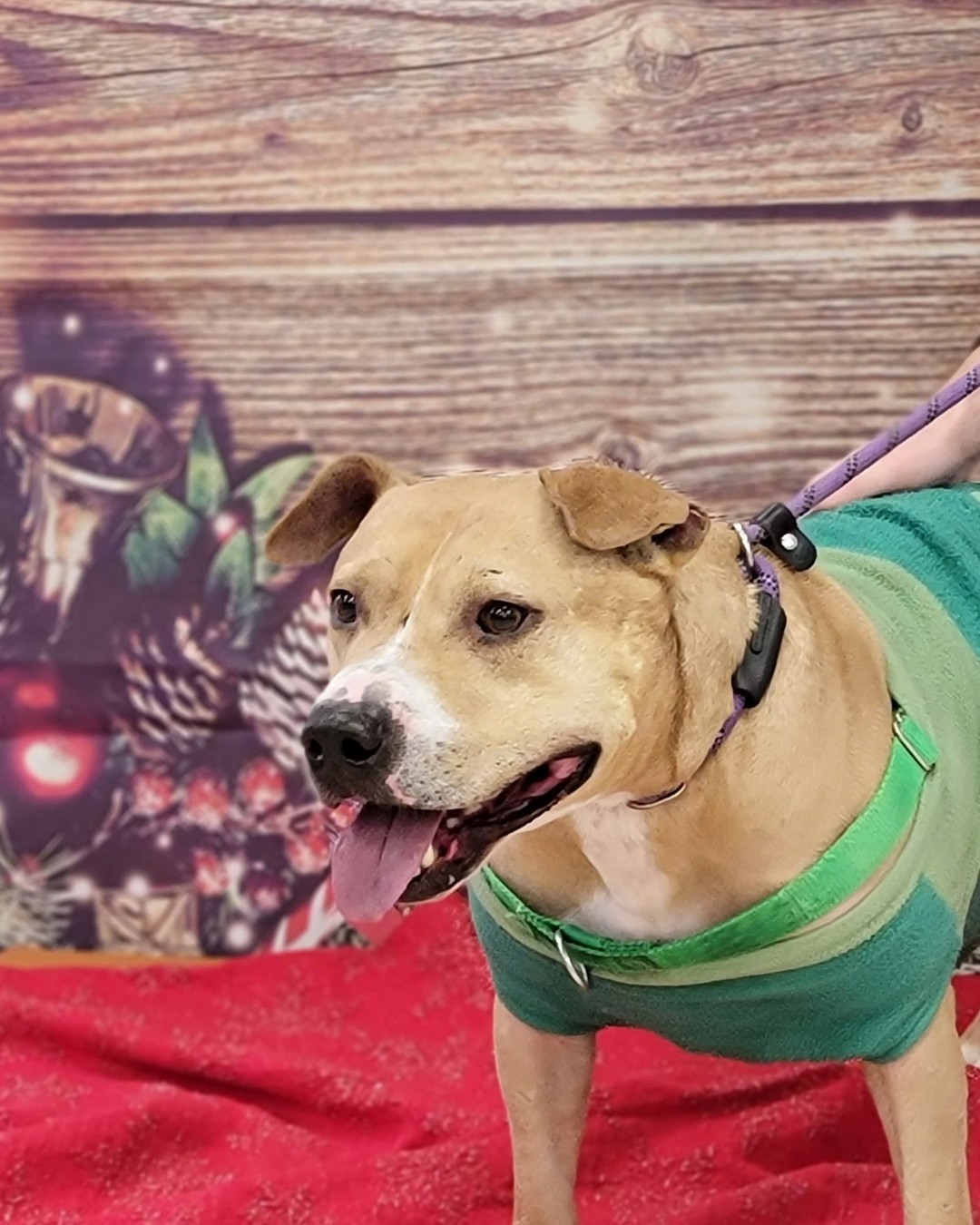
When you walk beside a shelter dog through such a long stretch of waiting, their victory becomes your victory too.
Rachel later shared a memory from the last time she took Green out.
He did not want to go back into his kennel.
She told him, honey, this is the last time I have to put you back in here.
Those words carry the whole story.
They hold the pain of every previous return to the kennel.
They also hold the relief of finally knowing that this one would be the last.
Rachel said she would miss him, but for very good reason.
She hoped it was not goodbye, only a see you soon in his new home.
That kind of farewell is filled with joy and ache at once.
It means loving a dog enough to let the happy ending belong to him.
For Green, adoption meant more than simply leaving the shelter.
It meant being seen clearly at last.
Someone looked at him and did not stop at old stereotypes.
Someone looked beyond the label and saw the dog Rachel had known all along.
A sweet dog.
A gentle dog.
A loving dog.
A dog who had spent far too long waiting for the world to understand him.
We do not need every detail of his new life to know why his story matters.
We know he is no longer spending his days in a kennel.
We know he is no longer watching people pass him by.
We know that after a cruel beginning and an unbearably long wait, he finally got his chance.
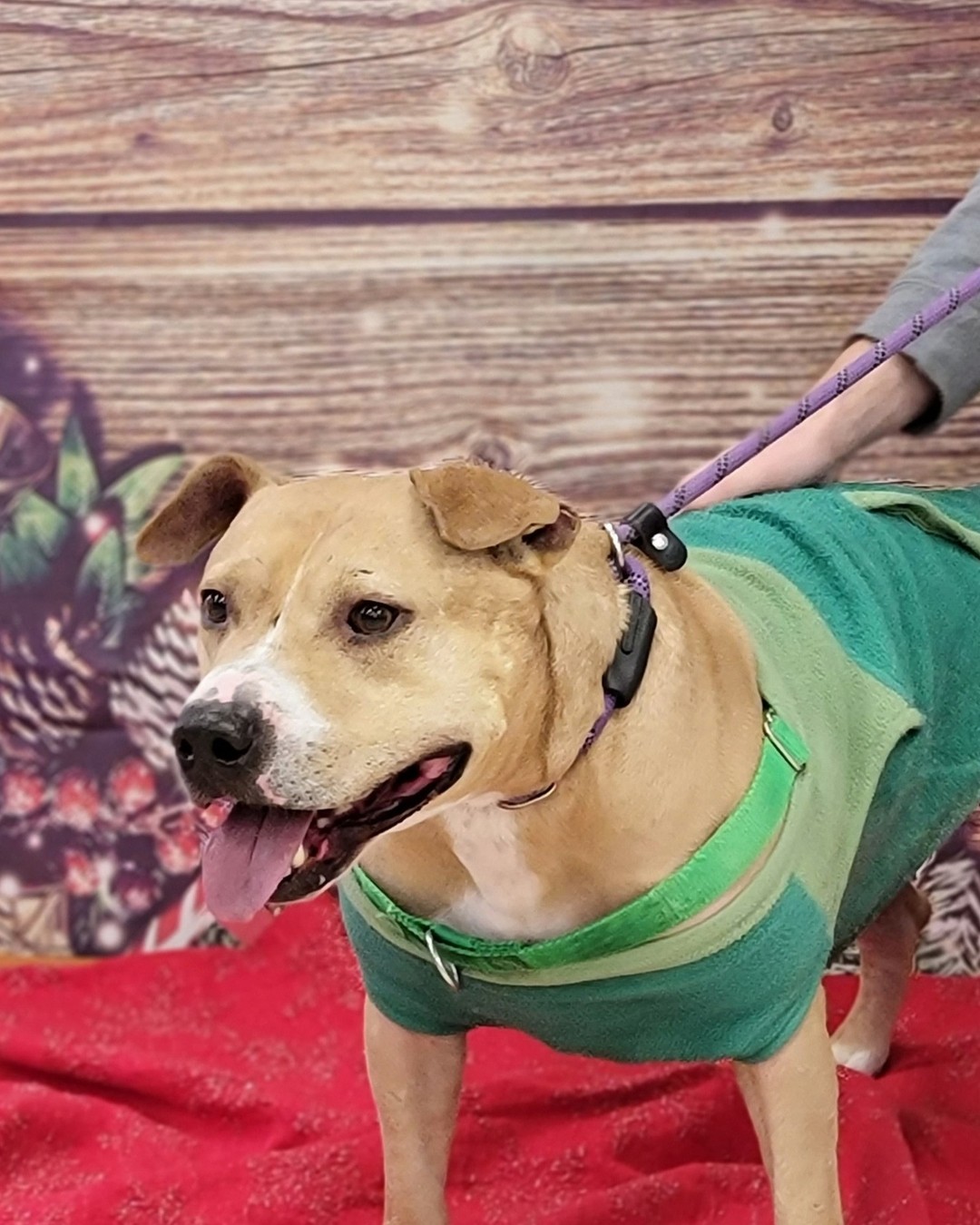
That is the part worth holding onto.
Somewhere, it is easy to picture him now.
Maybe he is carrying one of his favorite toys.
Maybe he is stretched out in a quiet room.
Maybe he is looking up at his family with that same smile Rachel never forgot.
Green’s story is painful because of how long he had to wait.
It is beautiful because he never stopped being himself.
He stayed tender.
He stayed hopeful.
And in the end, that gentle heart finally led him home.
For Green, the door finally opened.
And this time, it led somewhere beautiful.
 Bones Waited Nearly Three Years, and Then Love Finally Stayed
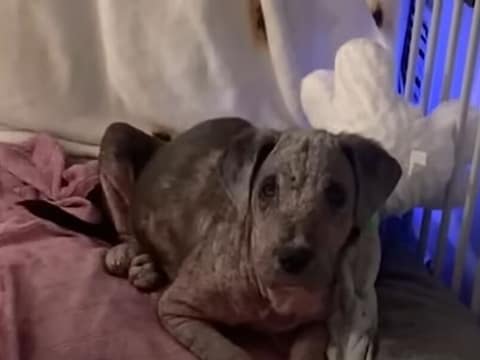 The Cold Could Not Put Out the Small Light in Harry
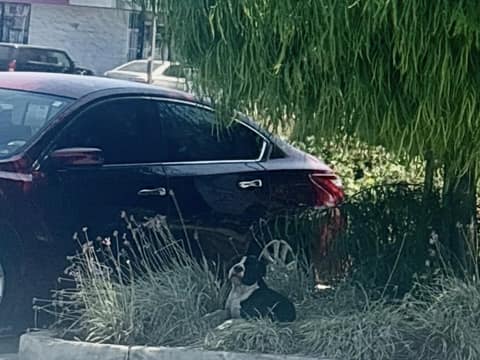 The Tired Stray Who Wagged His Tail the Moment Help Arrived
 A Tired Gray Face Looked Up, And One Woman Would Not Look Away
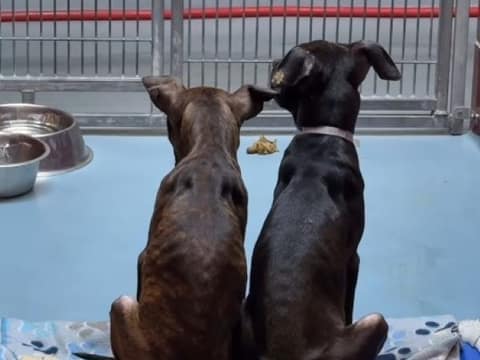 Two Puppy Brothers Reached Through the Bars Before Hope Ran Out
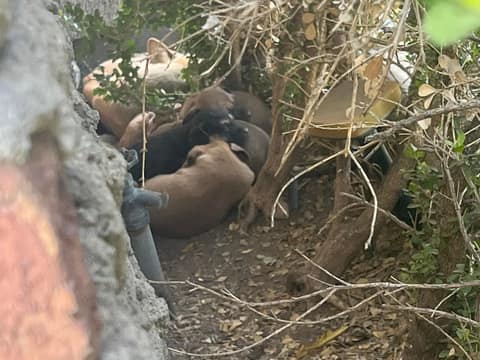 She Would Not Leave Her Babies, Even When The Wind Grew Cruel