
Becks Goodman was driving through a California neighborhood when a slight movement near a sewer caught her attention.
The flicker was small enough to miss, but it seemed so out of place that Goodman pulled over and went back for a closer look.
There, beneath the street, she discovered a tiny dog in obvious need of help.
Also readHeartbreaking Discovery Of A Dog Trapped In Hardened Paint And Fighting To Live
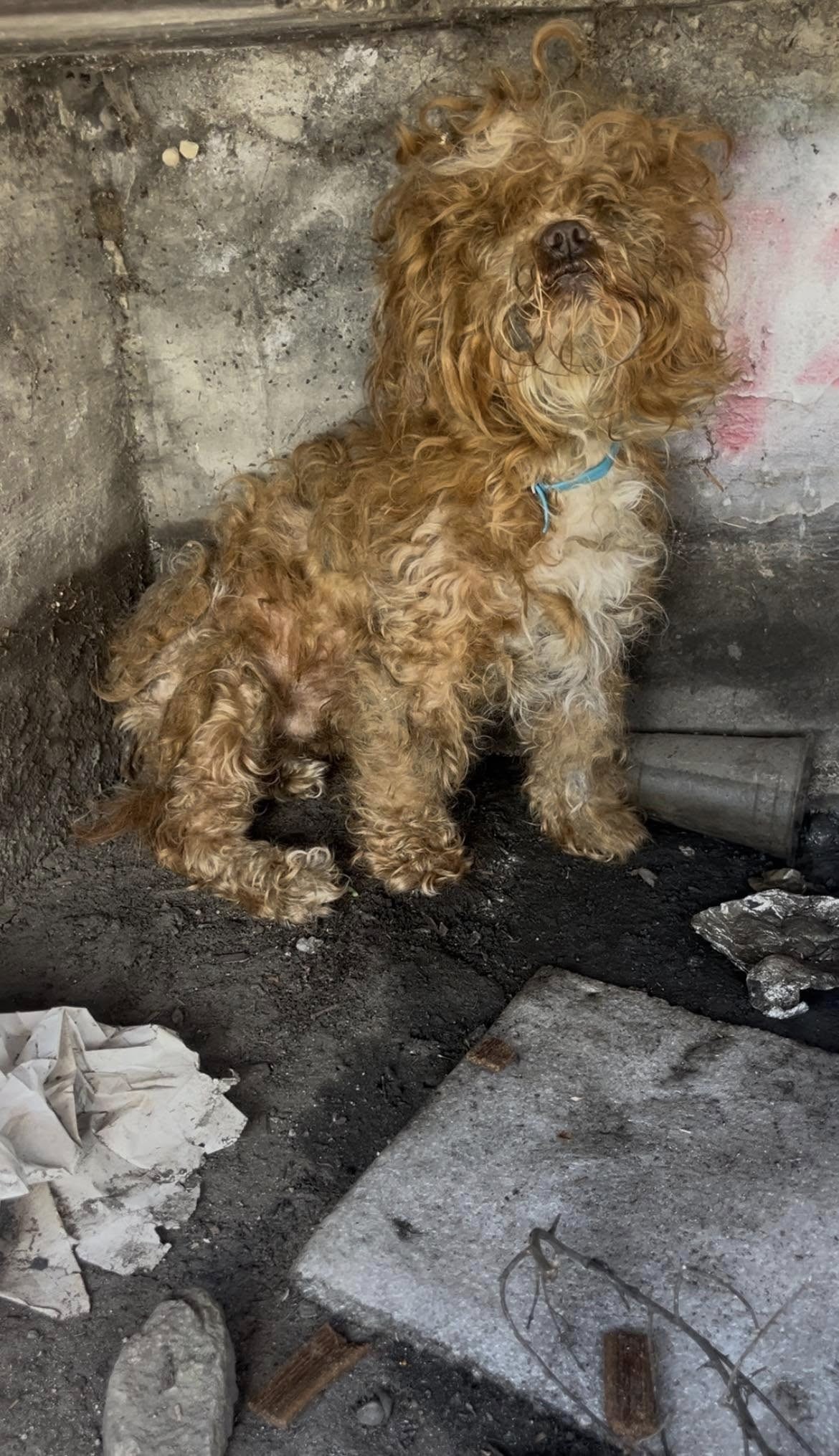
The pup was frightened, withdrawn, and covered in thick mats that pulled painfully against his body.
His condition suggested that he had been living without proper grooming, comfort, or dependable care for a long time.
The dog would later be named Lambert, but in that moment, he was simply a terrified animal hiding in the darkness.
Goodman tried speaking to him in a gentle, soothing voice, hoping she could persuade him to come closer.
Lambert would creep toward the opening, but he never emerged far enough for her to reach him safely.
Whenever the people above became too close or the situation felt overwhelming, he retreated into the sewer again.
Local residents were already aware of the little dog and had been leaving food near his hiding place.
Their kindness had kept him from starving and gave him the strength to survive until someone could organize a rescue.
However, the steady meals also meant that hunger was not powerful enough to overcome his fear.
Lambert would come out just far enough to eat before disappearing beneath the street again.
No one knew how long he had been there or what experiences had made him so wary of human contact.
His painfully neglected coat offered the clearest evidence that his hardship had not begun that day.
Goodman understood that she could not simply leave and hope Lambert eventually decided to trust someone.
She also knew that pursuing or crowding a frightened dog could send him deeper into the underground space.
What Lambert needed was experienced help from people who could shape the rescue around his behavior rather than expecting him to cooperate.
Goodman contacted rescuers Mary Nakiso and Suzette Hall, believing they could find a safe way to bring him out.
When they arrived, the rescuers saw how fear controlled every move Lambert made.
He might approach the opening for food, study the unfamiliar people nearby, and then vanish again before anyone could secure him.
A humane trap can often help rescuers catch a hungry stray without forcing direct contact.
Hall quickly recognized that this familiar approach was unlikely to work for Lambert because he was already being fed.
Food might draw him toward the opening, but it could not make him feel safe enough to enter a trap.
His most urgent need was not another meal.
It was a way out that did not depend on him overcoming his terror alone.
Hall realized the team would have to reach Lambert inside the place he considered his shelter.
Nearby local workers joined the effort and supplied tools, including a crowbar that could be used against the heavy sewer lid.
Together, the group prepared to open the barrier separating Lambert from the people determined to help him.
For the rescuers, the sewer was a dangerous hiding place where a vulnerable dog could remain trapped or move farther underground.
For Lambert, that same dark space may have felt like his only protection from unfamiliar hands, voices, and movement.
The group worked carefully to pry open the lid without creating more panic than necessary.
Every sound and motion mattered because Lambert had survived by retreating whenever something seemed unsafe.
When the heavy cover finally opened, the little dog still did not rush toward freedom.
He hesitated beneath the open space, uncertain about the people and sudden activity surrounding him.
His reluctance was understandable because no one knew what he had endured before Goodman noticed him.
Even a miserable hiding place can feel safer than the unknown to an animal whose trust has been broken.
The rescuers remained patient and used gentle reassurance rather than expecting Lambert to understand their intentions immediately.
They waited for the opportunity to secure him without making an already frightening experience more traumatic.
At last, Lambert was lifted from beneath the street and placed in protective hands.
The tiny dog who had repeatedly vanished into the shadows was finally above ground.
His fear did not disappear the moment he left the sewer, and his rescue could not erase whatever had happened in his past.
It did mean that he would no longer have to depend on food left beside a street or hide underground whenever someone approached.
Hall carried Lambert to a veterinarian for a complete examination.
Under the clinic lights, the full extent of the damage to his coat became impossible to ignore.
His fur was not merely dirty or lightly tangled, but packed into dense mats that had tightened against his body.
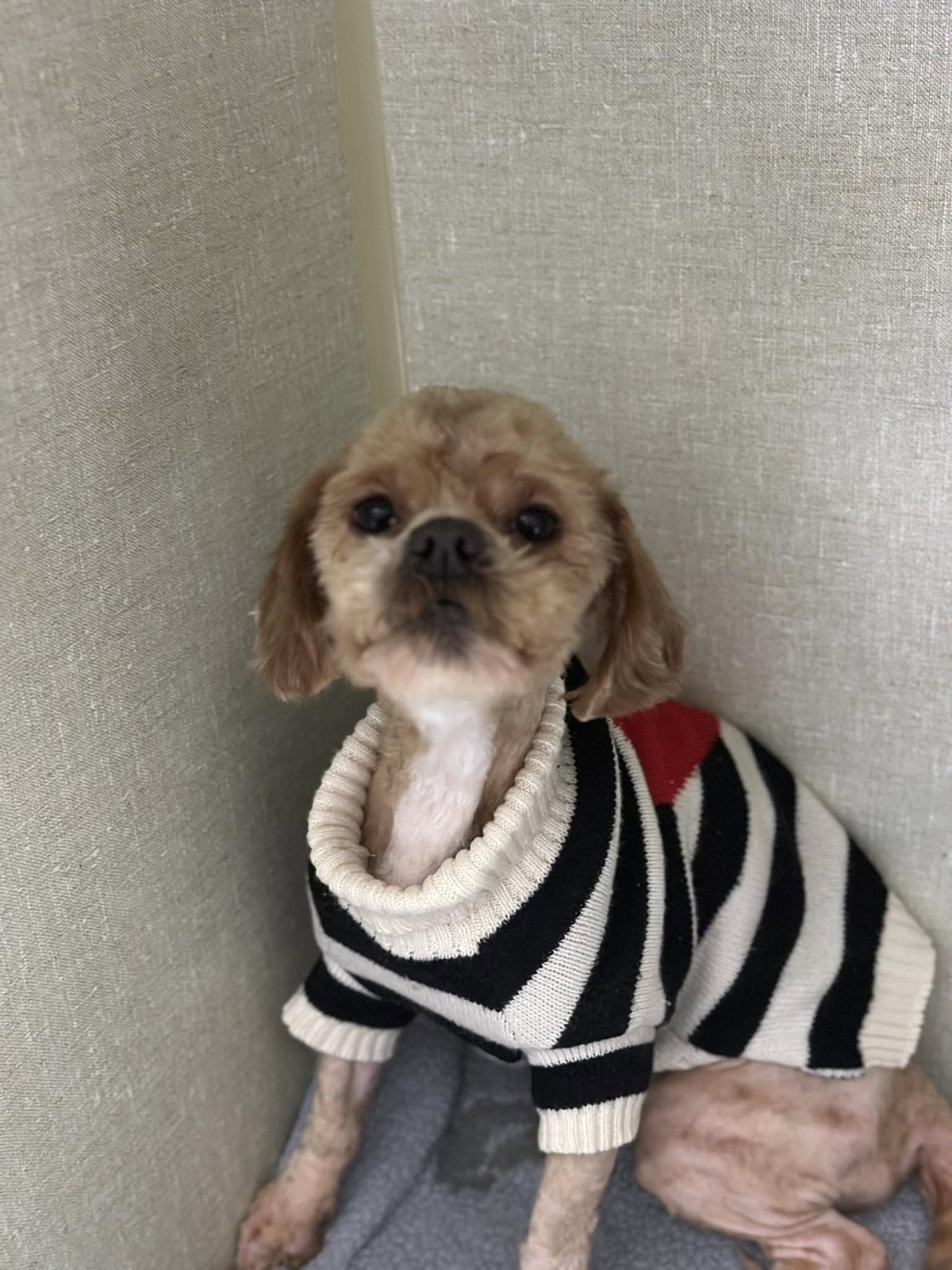
The matting was so severe that there was no practical way to brush it out and preserve the coat.
Lambert needed to be completely shaved to free him from the painful weight pulling at his skin.
The grooming process was uncomfortable, especially for a dog already overwhelmed by unfamiliar people and surroundings.
Still, Lambert endured it as the veterinary team carefully removed the physical evidence of prolonged neglect.
In some instinctive way, he appeared to understand that relief was finally within reach.
As the matted fur came away, the small and vulnerable dog hidden beneath it began to emerge.
The shave could ease his immediate discomfort, but it could not answer the many questions surrounding his life before the rescue.
No one could say how long Lambert had sheltered beneath the street or whether he had previously experienced consistent kindness.
He could not explain where he came from, why he had been alone, or what taught him to fear the people trying to help.
Those unanswered questions no longer had to determine what happened next.
Lambert had been found in time, and he now had an opportunity to recover somewhere safe.
Healing would involve more than treating the visible signs of neglect.
His coat could be removed during one visit, but rebuilding his confidence would require patience and repeated experiences of gentle care.
A calm voice could teach him that attention did not always signal danger.
A secure place to rest could show him that he no longer needed to remain hidden and alert.
Regular meals could help him learn that food would continue to arrive without requiring a risky journey to a sewer opening.
Most importantly, the people caring for Lambert could allow him to move forward at a pace that respected his fear.
Each day in his new home became another step away from the darkness beneath the street.
He was now surrounded by people who cared about his well-being and wanted him to feel secure.
For a dog accustomed to retreating whenever humans came near, that kind of attention may have been difficult to understand at first.
Old survival instincts do not vanish simply because the danger has passed.
Lambert might still feel the urge to hide, even when the person approaching him carried only kindness.
Trust can grow, however, when patience remains consistent and gentle interactions are allowed to build upon one another.
Every peaceful moment could help Lambert discover that he no longer needed fear to guide all his decisions.
His transformation was not only about removing the painful coat that had concealed his body.
It was also about slowly replacing the terror that kept him underground with a growing sense of safety.
Goodman made that future possible because she noticed a movement that another driver might easily have overlooked.
Instead of continuing on her way, she stopped long enough to recognize that a little life was in danger.
The residents who provided food, the rescuers who answered Goodman’s call, and the workers who supplied tools all played a role in Lambert’s survival.
Each person offered something he needed at exactly the right stage of the rescue.
The neighbors kept him fed until more direct help could arrive.
Goodman refused to look away after discovering him beneath the street.
Nakiso and Hall brought the experience needed to recognize that a food-baited trap would probably fail.
The nearby workers provided the crowbar and assistance required to open the heavy sewer lid.
Together, they adapted their approach to Lambert instead of waiting for him to conquer his fear by himself.
His rescue shows why helping a frightened animal sometimes requires looking beyond the most familiar solution.
Lambert had enough food to remain alive, but another meal could not convince him that walking toward people was safe.
Reaching him required cooperation, patience, and an understanding that his hiding place represented security from his perspective.
The rescue itself came down to a group of people refusing to give up on one tiny dog beneath an ordinary neighborhood street.
It involved gentle voices, careful movements, a crowbar against a heavy lid, and rescuers who remained patient when Lambert hesitated.
Afterward, it meant veterinary care, the removal of every painful mat, and a safe home where he could begin learning to trust.
Lambert did not need to understand how many people had come together on his behalf.
He only needed them to remain when fear kept pulling him back toward the darkness.
The sewer may have sheltered Lambert during a desperate chapter of his life, but it did not become his permanent home.
Because Goodman noticed the smallest movement and chose to stop, Lambert finally received the chance to experience safety, healing, and love.
 Ladybird Waited With a Bowl of Water and a Note That Changed Everything
 Pandora Was Sealed Inside A Box, But Love Was Waiting On The Other Side
 Morocho Fought the River for Six Hours, Then a Familiar Voice Called Him Home
 Thirty Minutes From Goodbye, A Pregnant Shelter Dog Found Safety For Her 11 Babies
 Myrtle Clung To A Bridge Ledge For 12 Hours, Waiting For Gentle Hands To Bring Her Home
 Frightened Mama Dog Hid Her Babies Beneath a Dumpster Until Love Found Them