
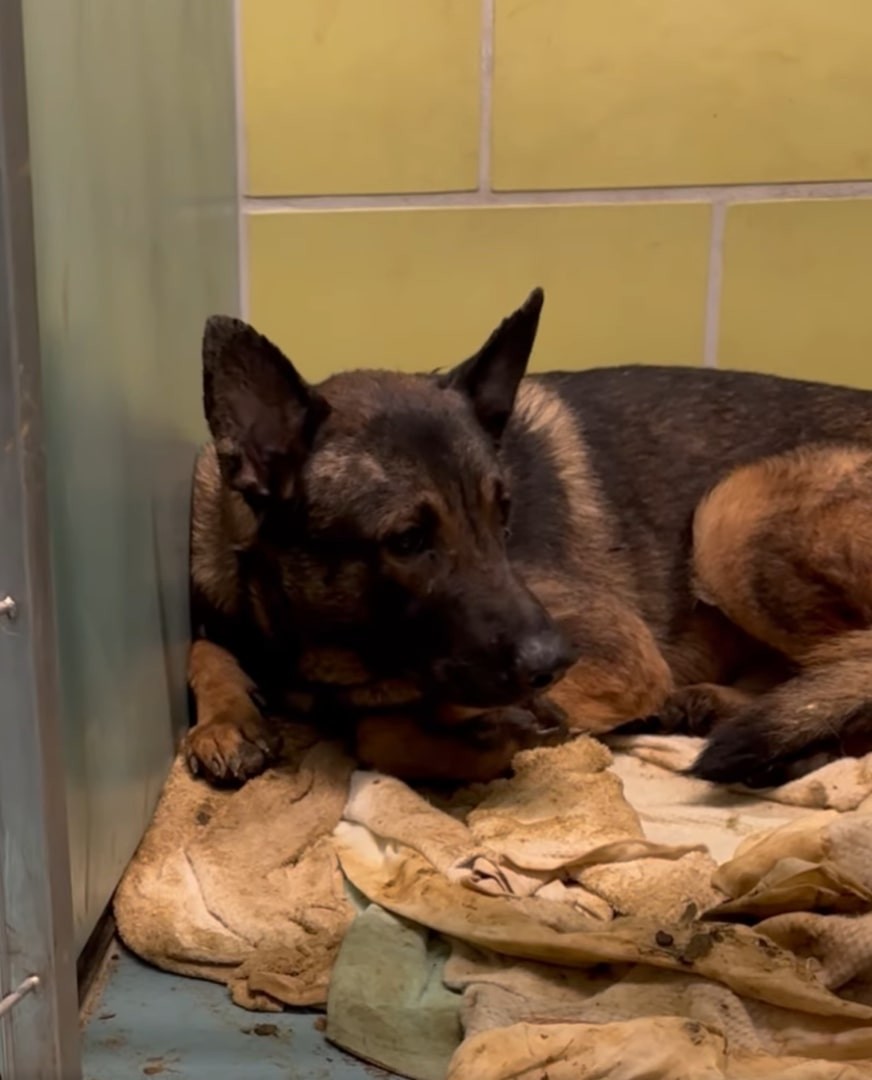
Sammie came into the world needing affection, gentle care, and a safe place where he could finally relax.
Instead, the German Shepherd was raised in a cramped apartment filled with dozens of other dogs.
He never experienced the freedom, fresh air, or sunlight that should have been part of an ordinary puppyhood.
Also readThey Wanted This Healthy Blind Dog Put Down – Until One Woman Said “Not On My Watch”
About 40 German Shepherds and Belgian Malinois were allegedly kept inside the apartment, ranging from young puppies to fully grown adults.
According to Animal Care Centers of New York City, the dogs had never been outside before their rescue.
Some were discovered inside closets and cupboards, while others had been packed into tight spaces without access to fresh air or sunlight.
There was barely enough room for the dogs to stretch, move comfortably, or escape the constant stress surrounding them.
For an intelligent and active dog like Sammie, life inside those confined spaces took an especially devastating toll.
Little by little, fear and isolation seemed to flatten his spirit until he stopped trying to move altogether.
He lowered his head, remained still, and withdrew so completely that he barely responded to the world around him.
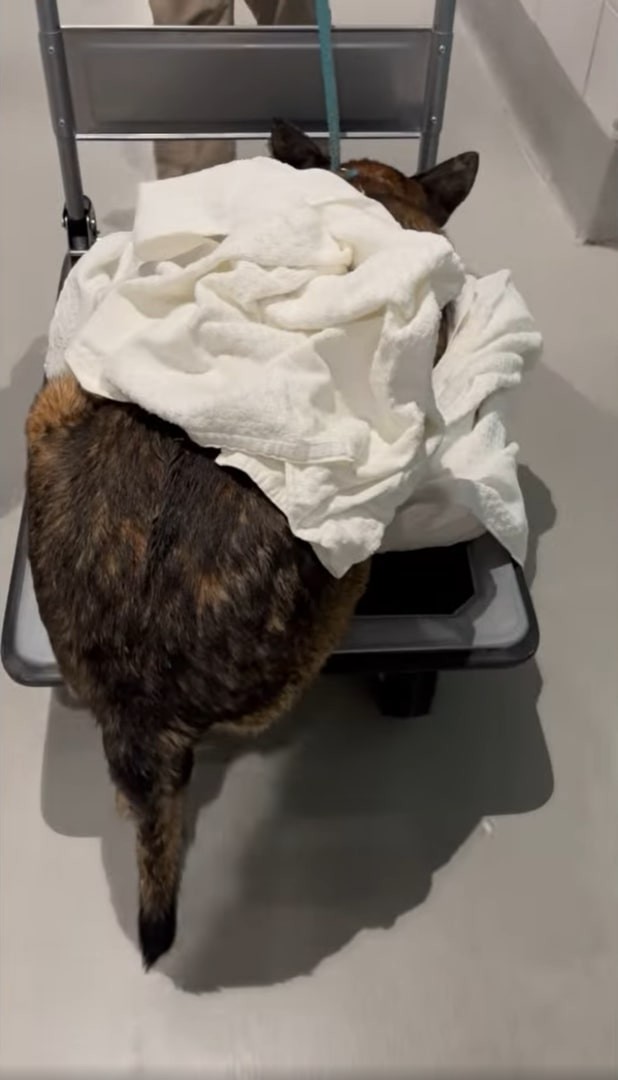
Freezing in place may have become the only way Sammie knew to protect himself from whatever might happen next.
Then Animal Care Centers of New York City received a report about the dogs and responded to the apartment.
Although rescuers knew the situation would be difficult, what they discovered was even worse than they had anticipated.
Every dog needed immediate help, but taking in about 40 frightened shepherds at once was more than one organization could manage alone.
Animal Care Centers contacted Zion’s Mission Animal Rescue, which agreed to take ten of the dogs into its care.
Sammie was among them, and his condition immediately left the rescue team deeply concerned.
Unlike a dog who might bark, pull on a leash, or retreat from unfamiliar people, Sammie showed almost no reaction at all.
He could not lift his head, refused to move, and appeared completely overwhelmed by fear.
Because rescuers could not walk him to the waiting car on a leash, they carefully wrapped him in a blanket.
They placed him on a cart and gently wheeled him away from the apartment where he had spent his life.
Every movement had to be slow and calm because Sammie had no reason yet to understand that these strangers were helping him.
Sloane Quealy, co-founder of Zion’s Mission Animal Rescue, remained close and tried to comfort him with quiet words and gentle touches.
She asked nothing from him and simply tried to show him that he was no longer alone.
Still, Sammie remained unresponsive and motionless for the rest of the day.
Even after the physical walls were behind him, the fear they had created seemed to follow him.
Quealy began to worry that Sammie’s legs might have weakened because he had spent so much time without using them normally.
No one knew whether he lacked the physical strength to stand or was simply too terrified to try.
Either way, his rescuers understood that pushing him would not help and that his recovery would require patience.
They arranged for Sammie to stay at a training facility where he could decompress for about a month.
The team hoped that a quiet environment, consistent care, and room to move would help him regain enough confidence and strength to stand.
No one expected a dog carrying so much fear to transform overnight.
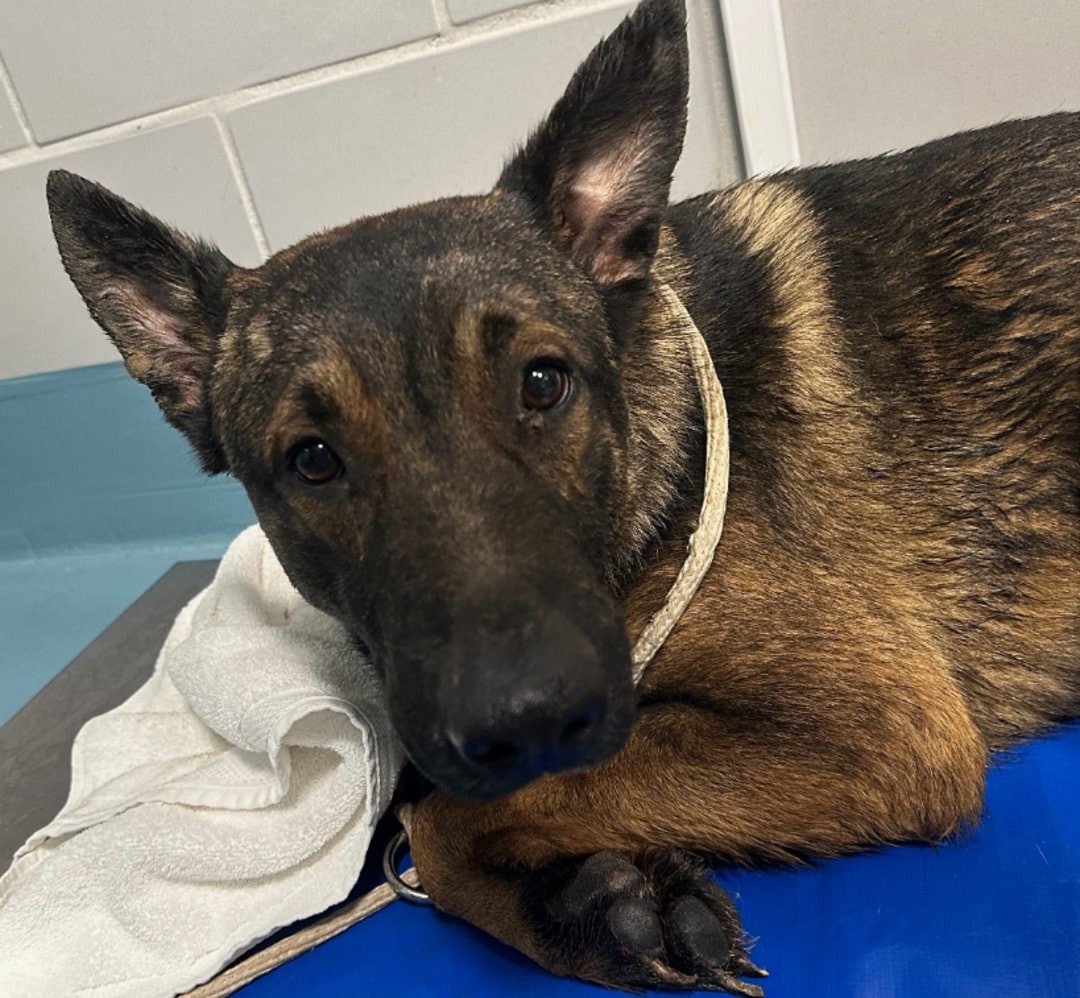
His first breakthrough would come not through a leash, a treat, or a person’s reassuring voice, but through familiar companions.
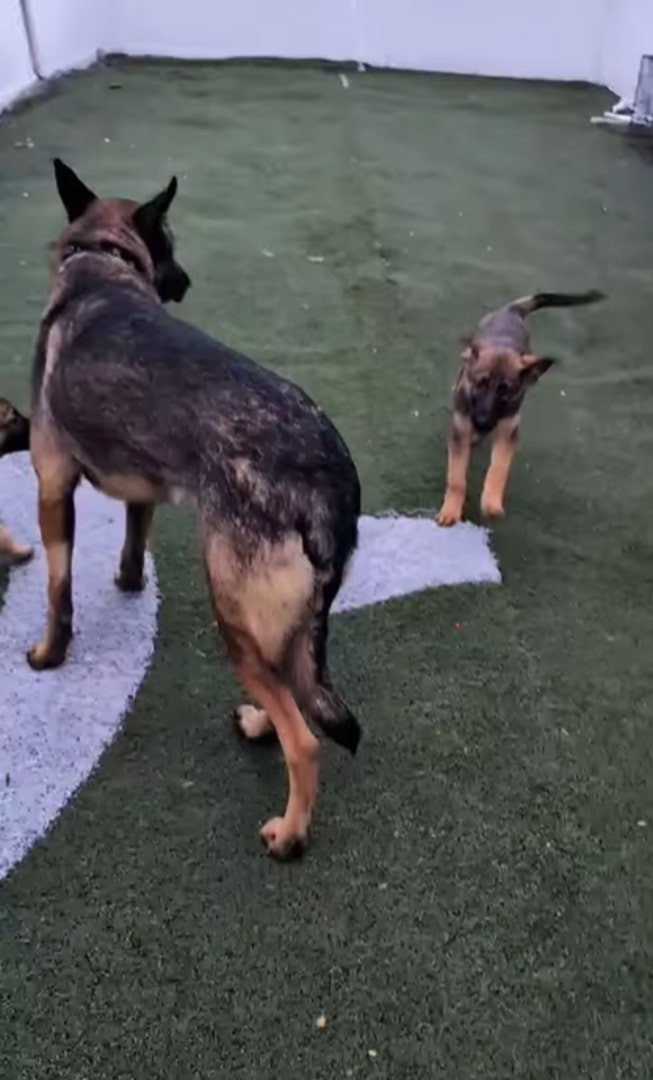
A few puppies rescued from the same apartment were brought into the yard near Sammie.
The puppies raced around the open space, moving with an energy and freedom that had been impossible inside their former home.
As Sammie watched them run, something in his demeanor began to change.
He perked up, lifted his attention toward them, and finally showed an interest in joining what was happening around him.
The dog who had needed to be carried from the apartment began moving on his own.
No one pulled him forward or forced him onto his feet because the puppies had reached him in a way his human caregivers could not yet manage.
Their familiar presence appeared to show Sammie that the strange new yard was safe.
These were dogs who had come from the same frightening place and were now running freely without anything bad happening to them.
As they played, Sammie joined them.
The change deeply moved the people who had watched him remain frozen only a short time earlier.
His willingness to move did not mean every trace of fear had disappeared, but it marked an extraordinary first step.
The puppies gave Sammie a bridge between the only life he had known and the safer one waiting for him.
After seeing them, Sammie released a long sigh and lay down beside them.
Zion’s Mission Animal Rescue later described it as the moment the team knew he understood that he was safe and loved.
For a dog who had spent his life confined and afraid, simply resting beside the puppies was a powerful act of trust.
Sammie no longer had to make himself small, remain perfectly still, or shut out everything around him.
For the first time, he could rest in an open space with familiar friends nearby.
In the days that followed, Sammie continued to emerge from the fear that had kept him motionless.
He stopped hiding and freezing as often, started playing with the puppies, and began seeking affection from his caregivers.
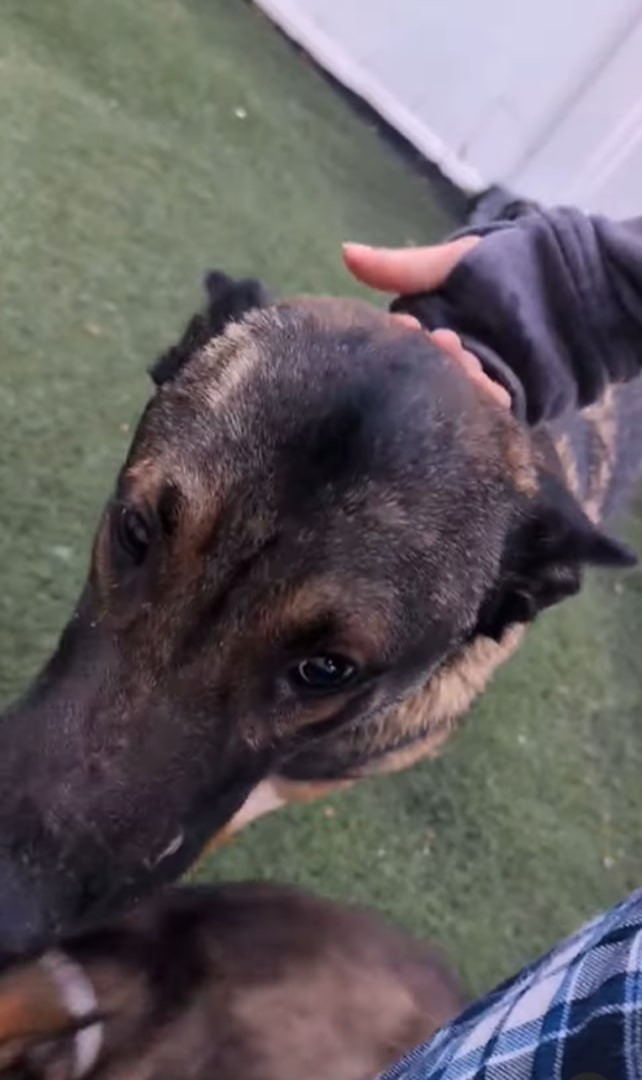
Hands that once seemed unfamiliar and frightening gradually became a source of comfort.
Each playful moment helped Sammie use his body, while every peaceful interaction taught him that the danger had passed.
His progress did not come from anyone demanding that he be brave or expecting him to behave like an unaffected dog.
It came from patient rescuers, familiar canine companions, and an environment where he finally had enough safety to make his own choices.
Dogs recovering from severe fear may need quiet routines and caregivers who understand that trust cannot be hurried.
They may not immediately accept affection, make eye contact, take a treat, or walk willingly through an unfamiliar doorway.
Those reactions do not mean that kindness has failed, because healing often begins long before the visible signs appear.
In Sammie’s case, the puppies opened a door that human reassurance alone had not been able to reach.
Once he took that first step, his caregivers could continue showing him that people could offer gentleness without pressure.
He was able to learn that he would not be forced back into a closet or cupboard.
He could explore an open yard, move away from something that worried him, or return to the other dogs for reassurance.
Choices that seem ordinary for most dogs represented an entirely new kind of freedom for Sammie.
His past had bruised his spirit, but the joy he showed around the puppies proved that it had not broken him.
The plan was for Sammie to spend approximately one month at the training center before becoming ready for adoption.
Because of his history and breed-specific needs, his rescuers believed his future home would have to be selected carefully.
His ideal family would have experience with German Shepherds and understand how to support a dog recovering from profound fear.
A spacious yard would allow Sammie to move, explore, and enjoy the outdoors that had been denied to him for so long.
Another friendly dog might also help him feel secure, especially after his rescued companions played such an important role in his breakthrough.
His future family would need patience during moments when an unfamiliar sound, place, or movement caused old fears to resurface.
There might be times when Sammie needed space rather than touch, along with days when progress appeared slower than expected.
There would also be opportunities for joyful first experiences that most dogs encounter much earlier in life.
He could feel rain on his coat, stretch across a soft bed, walk beside someone he trusted, and discover the simple pleasure of playing outside.
With patient care, ordinary moments could become proof that the dark apartment was truly behind him.
Sammie’s suffering should never have happened, but his recovery shows what safety and companionship can mean to a deeply frightened dog.
He did not need to be fixed in a single day or pushed into pretending that his fear was gone.
He needed people willing to wait, a peaceful place to recover, and the comfort of dogs he already recognized.
The puppies gave him the reassurance he needed as they raced freely through the yard.
Their joy reached the part of Sammie that had withdrawn from everything else, inspiring him to lift his head and move again.
That first long sigh beside his friends did not erase his past, but it marked the beginning of a different future.
Sammie still had healing ahead of him, yet he no longer had to face it alone.
At last, he could rest in the light with open space around him and familiar companions close by.
 A Pregnant Dog Kept Wandering Past Their Home, Until One Day She Found Her Way Inside
 A Shivering Mama Curled Around Her Babies Until Help Found Them
 Two Dogs Waited Under a Black Tarp in the Missouri Heat Until Rosie Stopped
 A Mother Dog’s Search for Food Led to Three Tiny Lives Under a Shed
 A Shivering Dog Waited at Her Door, and Found the Family She Had Been Missing
 Too Weak to Stand, Titus Lifted His Eyes When Help Finally Found Him