
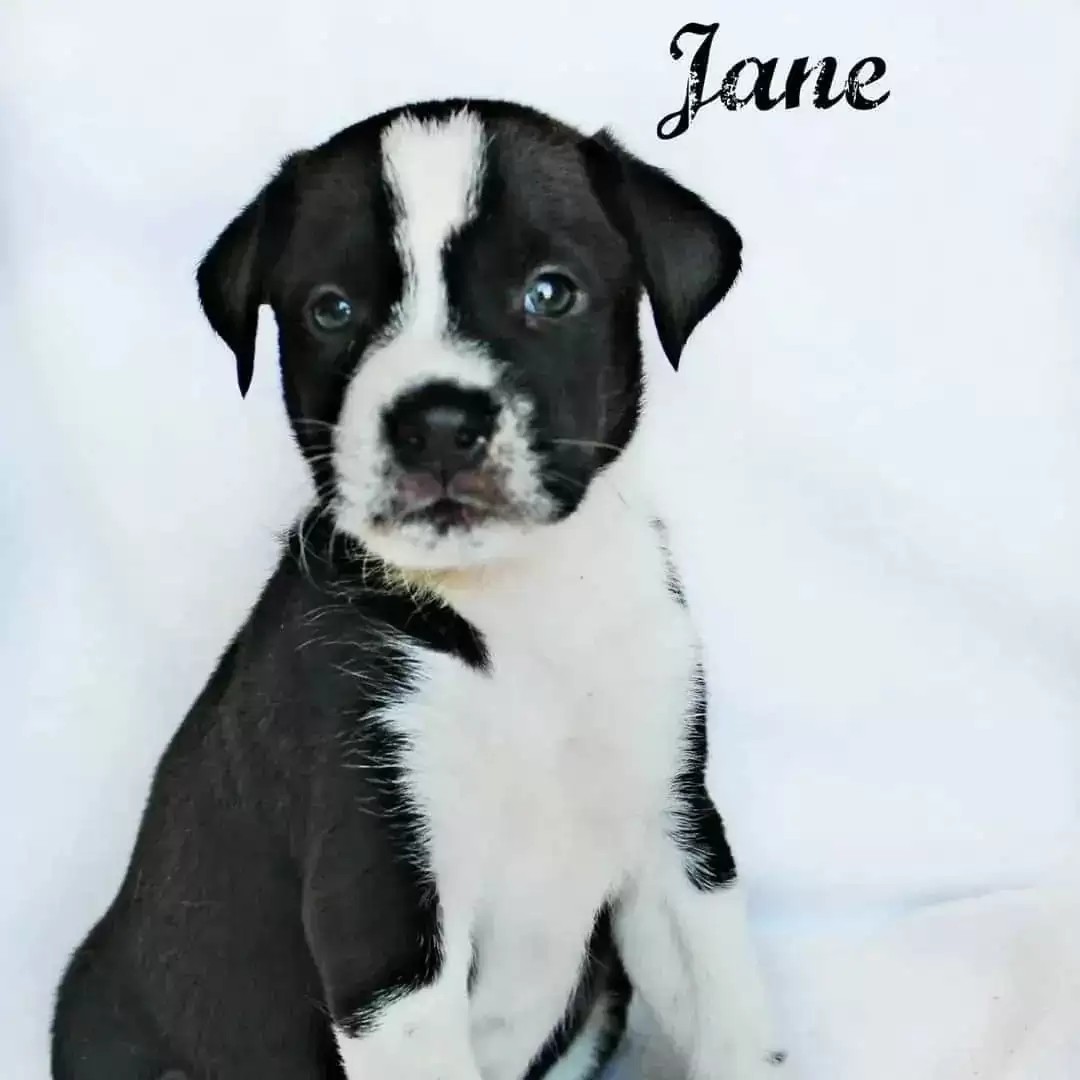
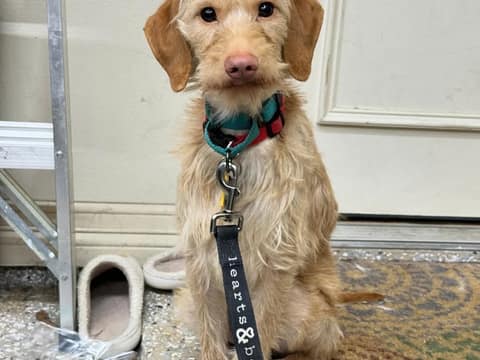
Jane was only hours old when rescuers brought her, her mother, and her siblings to the Humane Society of Northwest Louisiana.
The shelter welcomed the fragile family with warmth, food, safety, and gentle care during the puppies’ earliest days.
Surrounded by people determined to help her thrive, Jane grew from a vulnerable newborn into a healthy young dog with a personality all her own.
Also read19-Year-Old Dog Transforms into Playful Puppy After Being Saved from Shelter
Within a few months, a family adopted Jane and took her home while she was still a puppy.
Everyone hoped she had found the place where she would spend the rest of her life, but the situation became more complicated as Jane grew older.
Jane did not get along with the small dogs in the household, creating a challenge that her family could not ignore.
According to Walton of the shelter, the family spent years trying to make the arrangement work before accepting that Jane needed a different environment.
“Unfortunately, Jane just did not like the small dogs in the home,” Walton told The Dodo.
“They tried for years to work with her, but, ultimately, they did the right thing by bringing Jane back to us,” Walton added.
Returning Jane was not an easy decision, but it gave her another opportunity to find a home better suited to her needs.
For Jane, however, the transition back to shelter life was difficult.
She had spent years learning the familiar sights, sounds, people, and routines of a home, only to find herself surrounded by shelter activity again.
Dogs cannot understand careful explanations about compatibility or why a family believes surrender is the safest choice.
They only know that everything familiar has suddenly changed.

Although the Humane Society of Northwest Louisiana had once cared for Jane as a newborn, it was not the home she remembered.
The barking dogs, unfamiliar smells, busy footsteps, and changing faces left her feeling uncertain.
Jane became shy and reserved, and the staff could see how much she struggled to relax.
Instead of expecting her to adjust immediately, her rescuers gave her time and looked for ways to make her days easier.
Volunteers took Jane on field trips that allowed her to spend time beyond the shelter walls.
She went for car rides, watched the world pass outside the windows, and visited volunteers’ homes for breaks from the shelter environment.
Each outing gave Jane a chance to decompress while showing people more of the dog hidden beneath her nervousness.
Still, finding the right adopter proved challenging.
Jane needed people who understood her history, respected her needs, and were prepared to offer the stability she had lost.
As the wait continued, she discovered an unexpected source of comfort among the shelter’s supplies.
Jane became fascinated by the plush toys kept around the shelter for the dogs.
What began as curiosity soon turned into a deep attachment, and the stuffed animals became a dependable part of her routine.
Jane carried the toys, curled around them, and rested beside them as though they were her own little family.
The shelter staff affectionately called the plushies her “babies” because of the tenderness she showed them.
“Jane loves her babies,” Walton said.
“She loves to snuggle up with them. Her sloth is her favorite!”
Among all her soft companions, the plush sloth held a particularly important place in Jane’s heart.
She could cuddle against it when the shelter felt busy, settle beside it during quiet hours, and keep something familiar close while so much else remained uncertain.
The toy could not explain why Jane had returned or promise when another family would arrive, but it offered comfort without asking anything from her.
It remained soft, familiar, and close whenever she needed reassurance.
Shelter workers watched Jane snuggle with her babies and saw a gentle side of her that could easily be overlooked if people focused only on her difficult return.
She was not simply a dog who had struggled to live with smaller animals.
Jane was sensitive, affectionate, and capable of forming strong bonds with the people and objects that helped her feel secure.
Her rescuers wanted potential adopters to understand that one challenging part of her history did not define her entire character.
A home can be wrong for a particular dog without that dog being bad, broken, or undeserving of another chance.
Sometimes personalities, household arrangements, or the needs of other pets create conflicts that love alone cannot solve.
Jane’s former family had tried for years before returning her, and the shelter welcomed her back rather than judging her for a situation she could not understand.
Now the staff and volunteers continued supporting her while they searched for a safer match.
The outings, car rides, home visits, and plush toys could not replace a permanent family, but they helped Jane move through the waiting period.
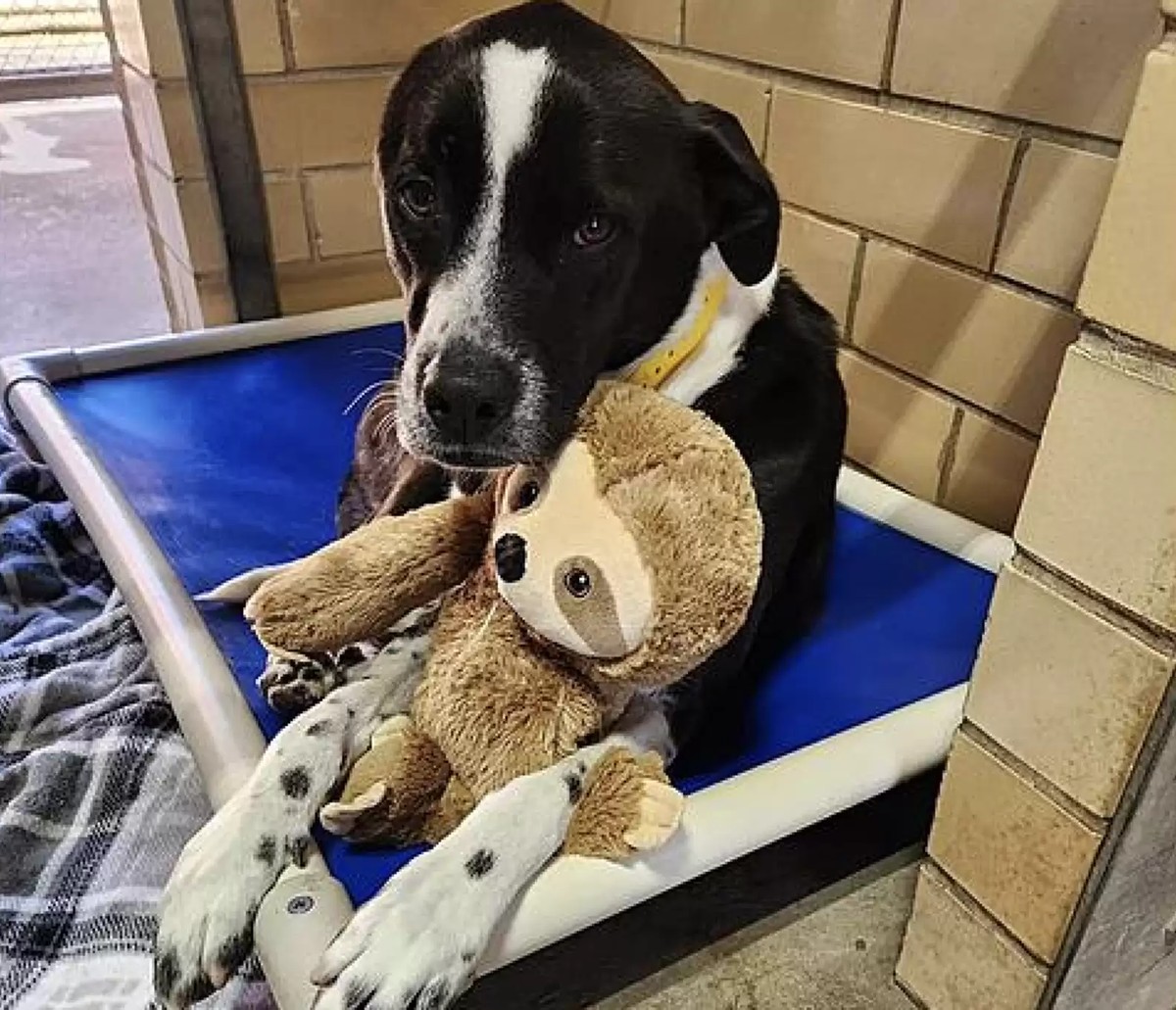
Whenever uncertainty became overwhelming, her babies were there.
Days passed as other animals arrived at the shelter and left with new families.
Jane kept waiting, leaning on her rescuers and returning to the stuffed companions that had become symbols of safety.
Her future remained uncertain, but the people around her refused to stop believing that someone would recognize how much love she still had to give.
That long-awaited change arrived when Sarah and Justin M. learned about Jane.
The couple fell for her and decided they wanted to give her the loving home she had been waiting to find.
They saw more than a shy dog who had been returned to a shelter.
They saw Jane as an individual whose past had shaped her needs without diminishing her worth.
For the shelter staff, the adoption was the joyful outcome they had hoped for throughout her difficult adjustment.
They had watched Jane withdraw after returning, celebrated every small moment of progress, and seen how much comfort she found in her plush babies.
Now they could help her begin again with people committed to making her part of their family.
On the day Jane left the shelter, the staff gave her a warm send-off.
They also made sure she would not have to face another major transition without the belongings that helped her feel safe.
Jane’s beloved plush toys accompanied her to Sarah and Justin’s home.
Their presence gave her something familiar to carry into a place filled with new rooms, sounds, smells, and routines.
Even a happy move can be overwhelming for a dog who has already experienced the loss of one home.
Jane could take time to explore while keeping her soft companions nearby and learning that Sarah and Justin were there to support her.
This departure was different from the transition that had brought her back to the shelter.
Jane was not losing a family or being left somewhere she did not understand.
She was going home with people who had chosen her after learning her story.
The staff would miss seeing her curled around her babies, but saying goodbye meant Jane no longer had to wait inside the shelter for her future to begin.
A shelter can provide safety, enrichment, medical care, and affection, yet even the kindest facility cannot fully replace the consistency of a permanent home.
With Sarah and Justin, Jane finally had the opportunity to settle into that consistency.
Her new family adored her personality and committed themselves to giving her the loving life she deserved.
They did not need Jane to erase her past or become a different dog before she could belong.
They simply needed to understand her, protect her, and build a home where everyone could feel secure.
Jane began thriving in her new home, surrounded by affection, happiness, and plenty of plush companions.
The toys that had comforted her through uncertain shelter days became part of a far brighter chapter.
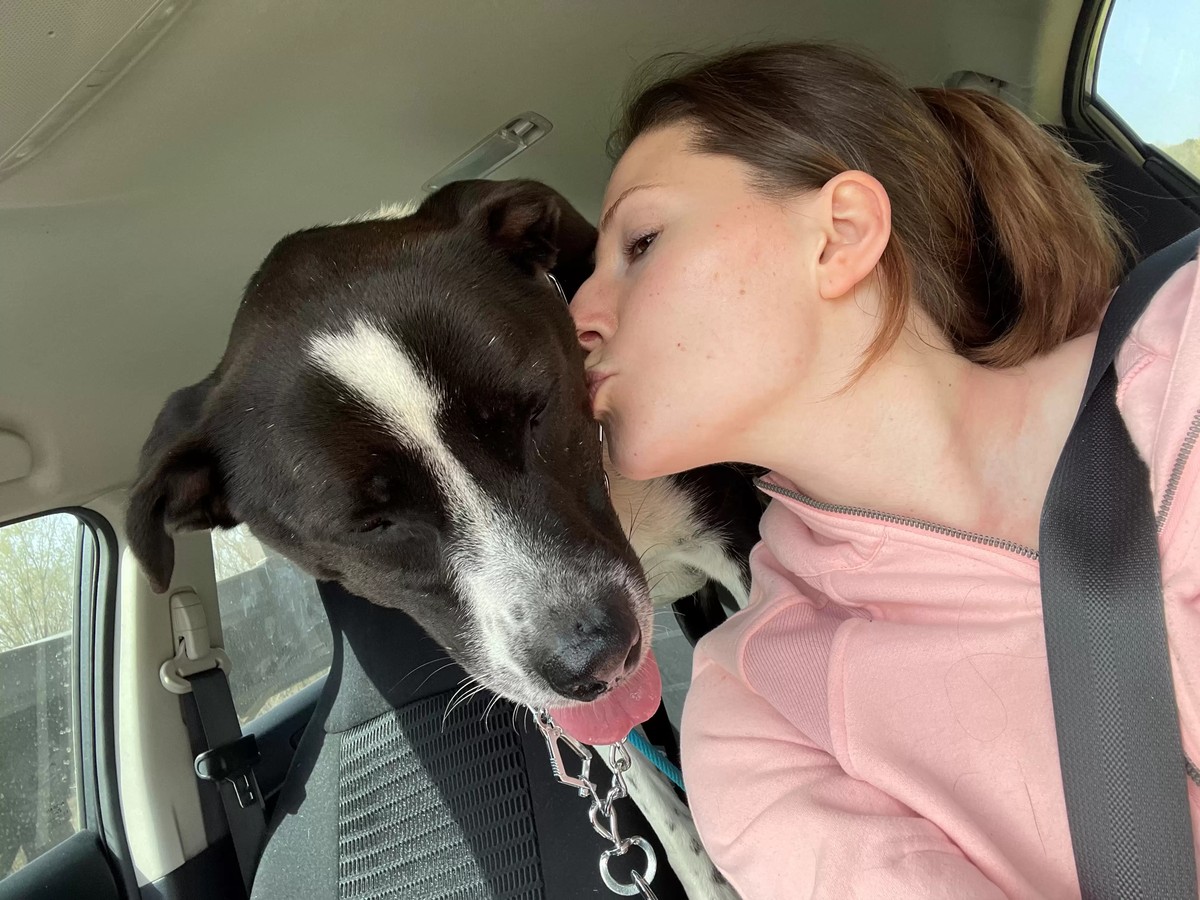
Her favorite sloth no longer had to help her endure an open-ended wait for someone to choose her.
It could rest beside her in the home where she was already wanted.
That change might seem small, but familiar objects can offer meaningful reassurance to an animal adjusting to a new environment.
For Jane, the plushies connected the care she received at the shelter with the security she was beginning to discover at home.
Her journey also offers an important reminder about dogs who are returned after adoption.
A return does not automatically mean that a dog failed or that the people involved never cared.
In Jane’s case, her family tried for years to address the conflict before deciding that bringing her back was the responsible choice.
The shelter then gave Jane the patience and support she needed while searching for a household that fit her better.
Volunteers offered outings and quiet visits, staff members made sure she had her treasured babies, and Sarah and Justin ultimately opened their home to her.
Each act of care helped carry Jane from uncertainty toward stability.
Through it all, her plush sloth remained a quiet source of comfort beside her.
Jane now has people who cherish her, a home where she can relax, and soft friends ready whenever she wants to snuggle.
After being rescued as a newborn, adopted, returned, and given another chance, Jane is finally where she belongs.
Tonight, she can curl up beside her favorite plush companion without wondering when home will find her again.
 Too Weak to Stand, Titus Lifted His Eyes When Help Finally Found Him
 Monty’s Black Coat Turned Silver While He Waited for Someone to Take Him Home
 Fergie Hid Her Hurt in the Missouri Woods Until One Woman Refused to Leave Her Behind
 For Three Months, Coconut Waited Beside a Busy Restaurant Until Someone Finally Saw Him
 Shrimp Lost the Friend Who Kept Him Warm, but His Gentle Heart Is Still Waiting for Love
 Raoul Spent His First Days In Safety Trembling, Until One Gentle Hand Changed Everything