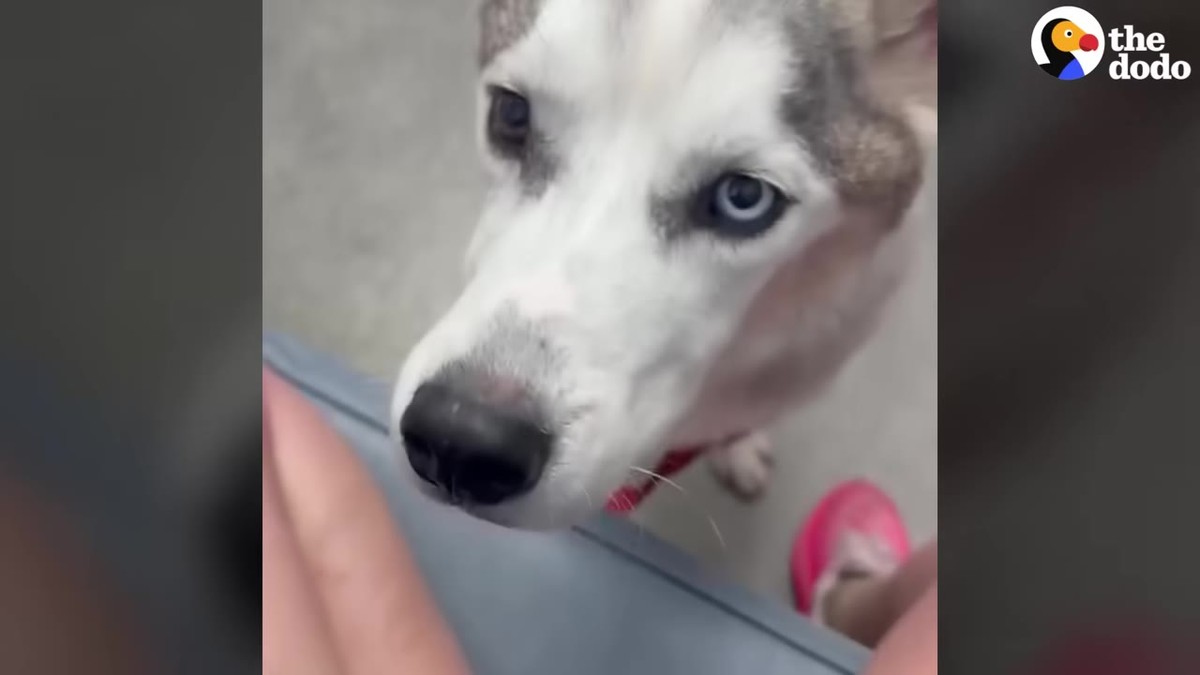
Found in Texas at just 19 pounds after months on his own, Wolf survived staggering medical odds, found a forever home, and inspired a new effort to help other pets get lifesaving care.
When Megan first saw Wolf, the sight was devastating.
In Texas, he was so severely emaciated that his body looked like skin stretched over bone, and he weighed only 19 pounds.
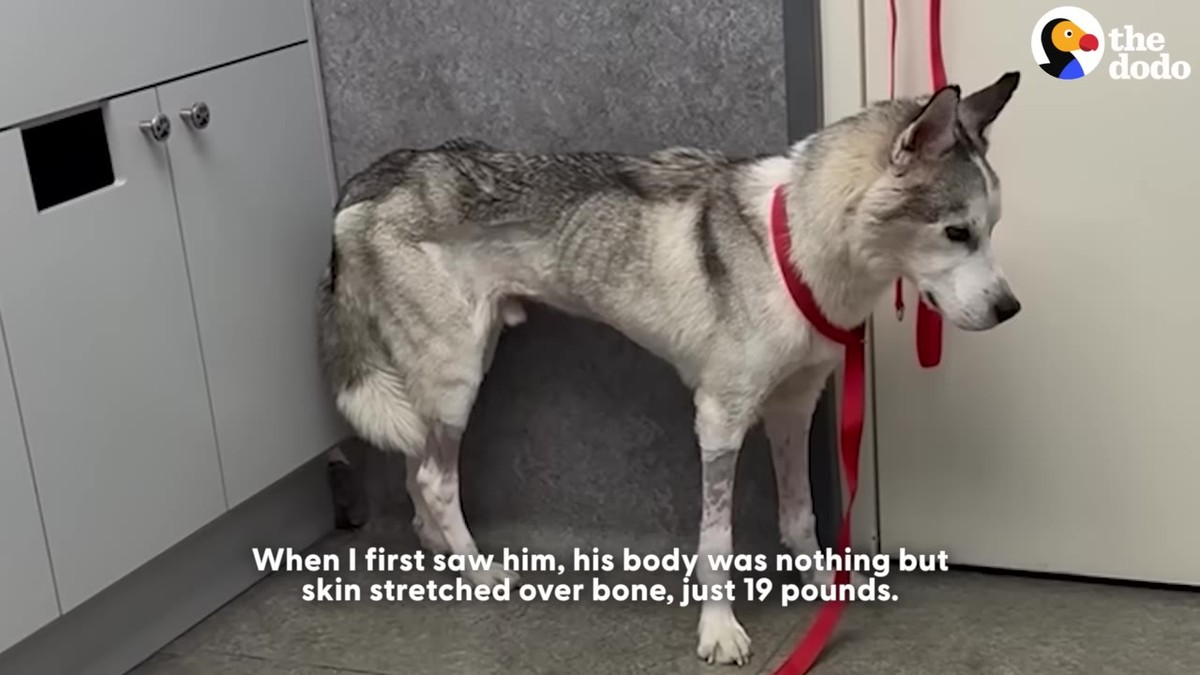
Wolf had once known life in a home, but after he got lost, he spent eight brutal months surviving on his own while his former owner moved on.
From the moment Megan got the call and saw his picture, she felt an immediate bond and knew she could not turn away from him.
Getting Wolf to safety was only the beginning.
Megan rushed him straight to the emergency room, hoping the veterinary team could quickly explain why he was in such terrible condition.
Instead, by the next morning, she left with a massive bill, a fragile dog, and far more questions than answers.
No one could figure out what was causing Wolf’s dramatic physical decline.
For the next three weeks, Megan and Wolf’s foster family watched him closely and tried to steady themselves through each uncertain day.
Some moments gave them hope.
Wolf would have little bursts of energy, then spend hours resting because his weak body simply could not do more.
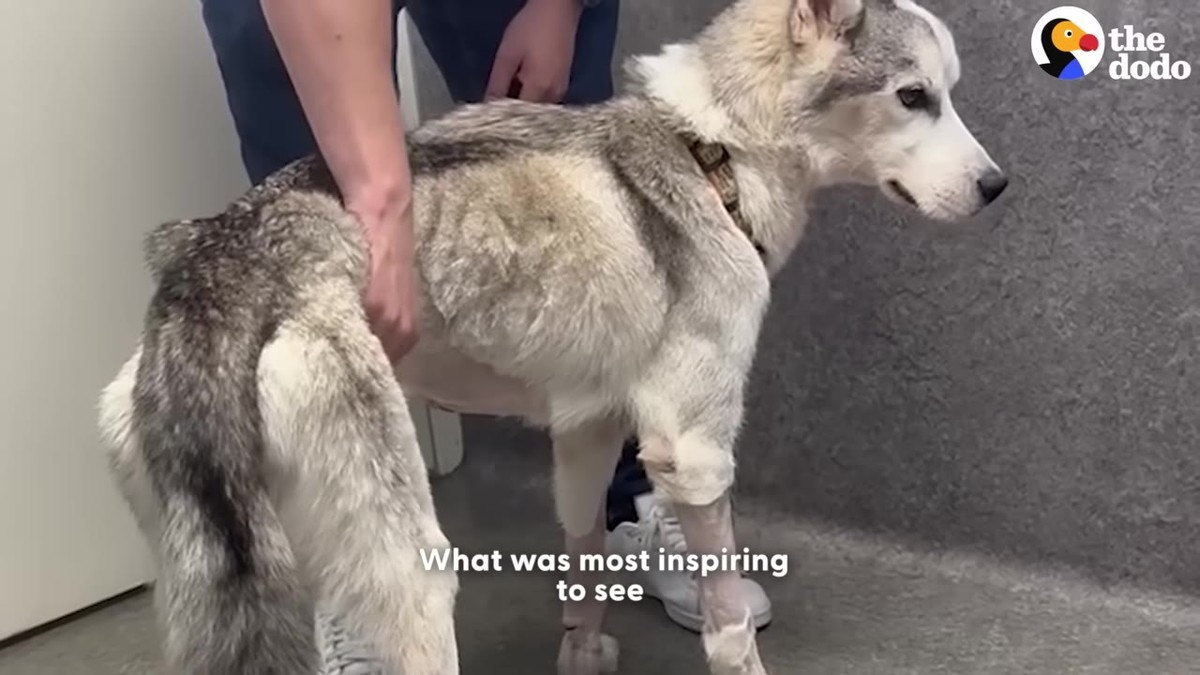
Even so, his spirit kept showing through.
That resilience stayed with everyone caring for him.
Even at his most exhausted, Wolf kept holding on, and his will to survive was impossible to miss.
Then day 20 brought a terrifying change.
His foster family noticed something was very wrong, and by the next morning Wolf could not stand or move his back legs at all.
They rushed him back to the emergency room in a panic.
Handing him over to the medical team was agonizing because they had no idea whether they would see him again.
The veterinarians immediately began running every test they could.
They needed to find the cause of the sudden paralysis and rapid decline.
The answer, when it came, was devastating.
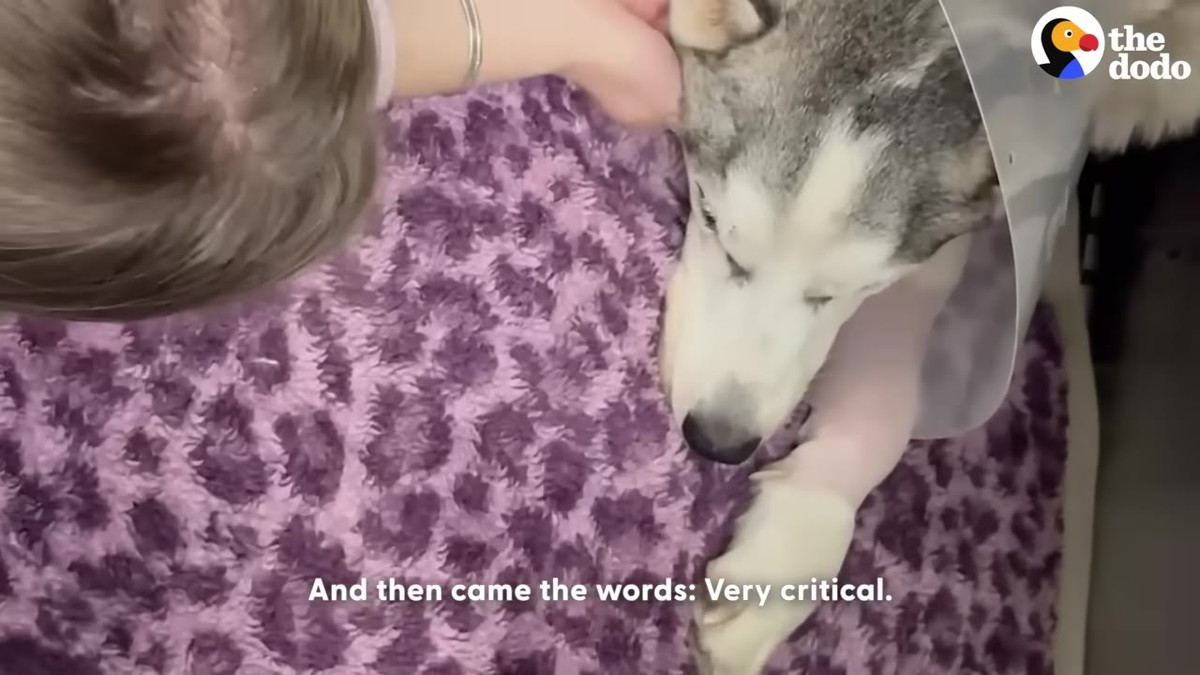
Wolf was in very critical condition, his prognosis was poor, and the team gently told Megan that humane options had to be discussed.
Still, Megan looked at him and saw a dog who was fighting to stay.
Finally, the doctors identified the cause as pythium, a rare and aggressive condition with a survival rate estimated at just zero to ten percent.
There was one possible surgical option, but it was extreme.
To try to save Wolf, surgeons would need to remove half of his stomach, reconstruct part of his GI tract, and take two-thirds of his pancreas.
The doctor strongly urged Megan to think seriously about the most compassionate choice because the odds were so low and the procedure so difficult.
It was a crushing decision.
In that moment, Megan turned to Wolf and silently asked him to tell her what he wanted.
Then, to her amazement, he stood up.
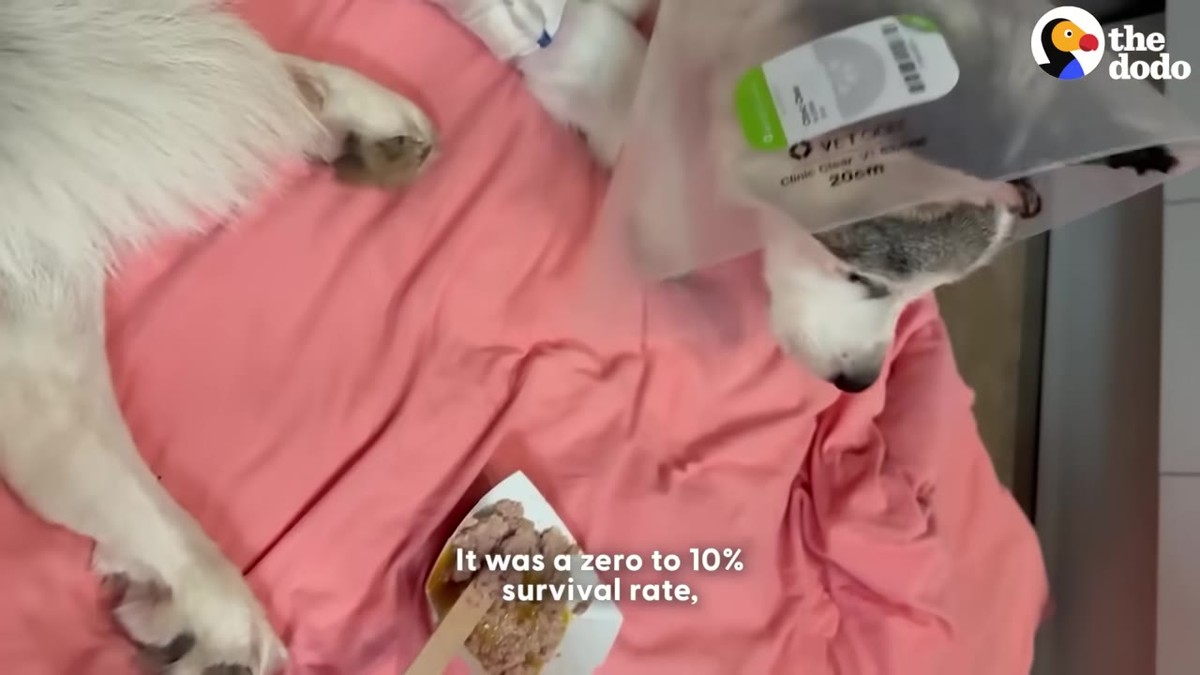
This was the same dog who had been unable to move, and Megan felt he was answering as clearly as he could.
She believed Wolf was telling her he was not ready to give up.
So she chose to do what she had done from the start and listen to him.
Before the daunting surgery, she even took him on a short walk, where he tried to move so fast she had to tell him, “slow down, mister.”
Then Wolf went into surgery.
The procedure lasted six and a half hours, and the wait felt endless.
When Megan finally got the call that he was waking up, she rushed back to the hospital to be with him.
But the update was heartbreakingly cautious.
The doctor told her Wolf probably would not make it through the night and advised her to say her final goodbyes.
That might have been the end of the story for almost any dog.
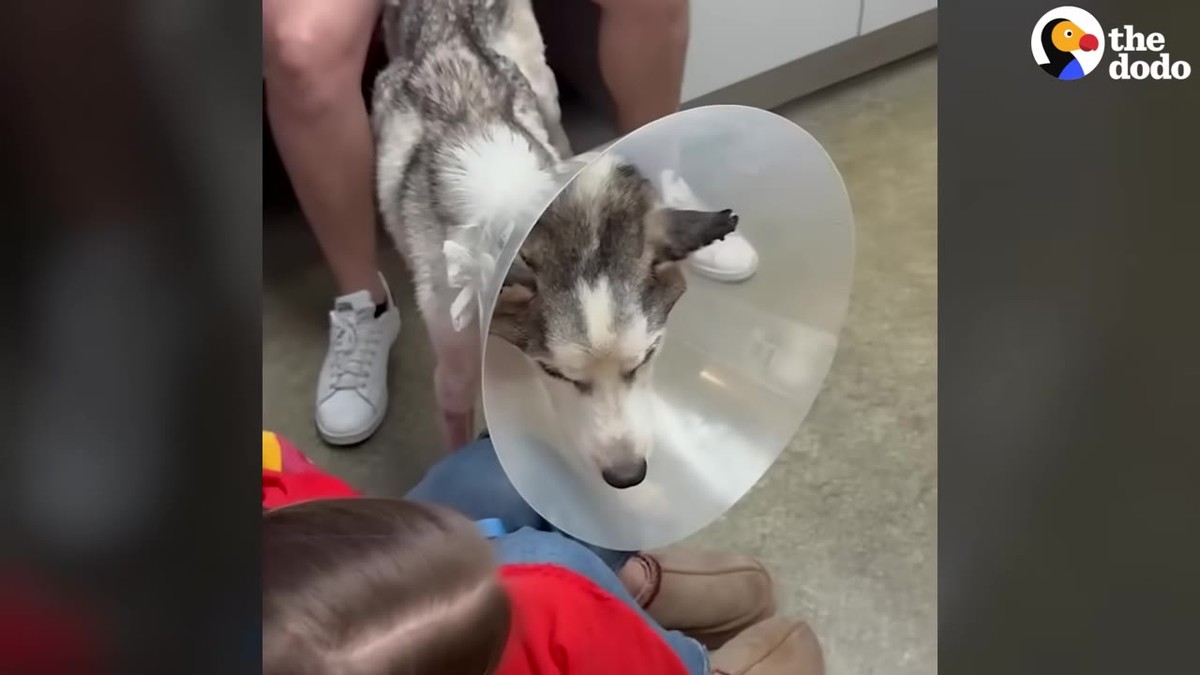
Instead, over the next hours and days, Wolf began to recover.
The veterinary staff had never seen anything like it.
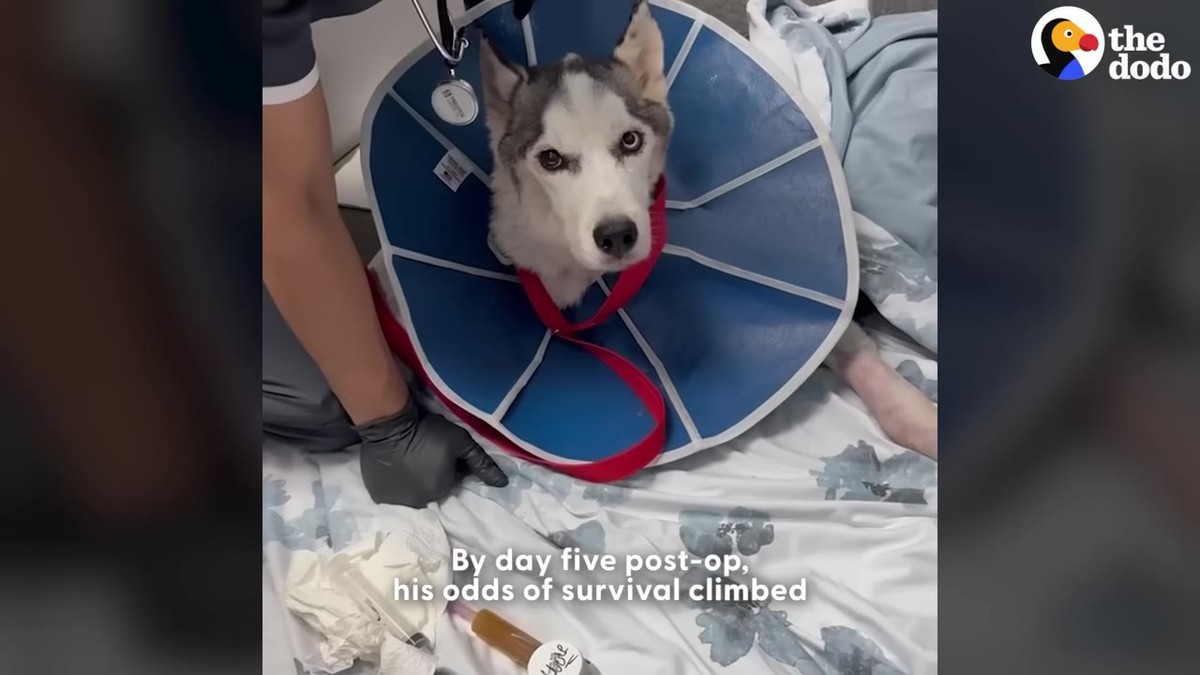
By day five after surgery, his odds of survival had climbed to nearly 70 percent.
What had sounded impossible was starting to become real.
The conversations at the hospital slowly changed from survival to recovery.
By day nine, Wolf was already acting like a different dog.
He was eating on his own, drinking water, and enjoying fresh air during his walks.
Each step forward felt enormous after everything he had endured.
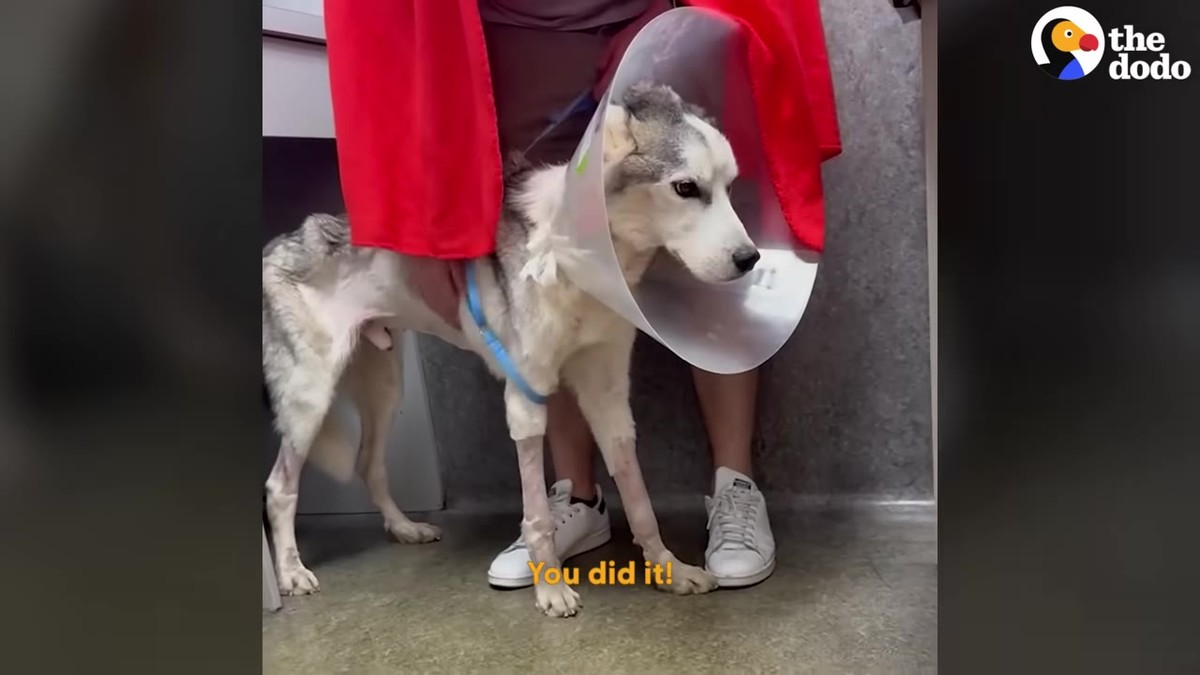
Three weeks later, his surgeon came in for one final check and surprised everyone with the news that he was being discharged just in time for Thanksgiving.
Before he left, Wolf made sure to say goodbye to the veterinary staff who had cheered for him through the darkest days.
He had become a favorite for good reason.
He had fought harder than anyone thought possible.
When Wolf got home, he was greeted right away by his excited foster brother.
It was a joyful welcome after weeks of fear, uncertainty, and hospital walls.
As the days passed, Wolf’s real personality started shining through more and more.
Two months after surgery, he was making the most of every bit of his second chance.
Megan describes him as incredibly smart.
He loves food, toys, chasing lizards, and “talking” constantly.
He also made one thing very clear.
Wolf was not planning to go anywhere, and his foster family felt exactly the same way.
The home that first took him in as a foster became his forever home.
That ending felt right for a dog who had fought so hard to stay in the world.
He had gone from a starving stray with almost no strength left to a dog who wanted to play, explore, and be heard.
For everyone who had walked through the fear with him, that transformation felt nothing short of extraordinary.
Wolf’s recovery also changed Megan in a deeper way.
Walking beside him through starvation, paralysis, a dire diagnosis, and a nearly unthinkable surgery opened her eyes to a painful reality in rescue.
Many families love their pets completely.
What they do not always have is access to affordable veterinary care when a crisis hits.

Megan realized families face impossible decisions every day because lifesaving treatment can cost more than they can manage.
Wolf got his miracle.
She could not stop thinking about the countless other dogs who do not get that same chance.
Believing Wolf came into her life for a reason, Megan decided his survival had to become something bigger than one remarkable rescue.
So she started an initiative to help families access care before they are pushed toward financial euthanasia.
She named it the Wolf Project in honor of the dog who refused to quit.
Wolf’s story began with a heartbreaking discovery in Texas and every reason to expect the worst.
It became a story about a dog who survived eight months alone, beat staggering medical odds, found a forever family, and inspired a mission built on hope.
And through that mission, his second chance may help open the door for many more.