
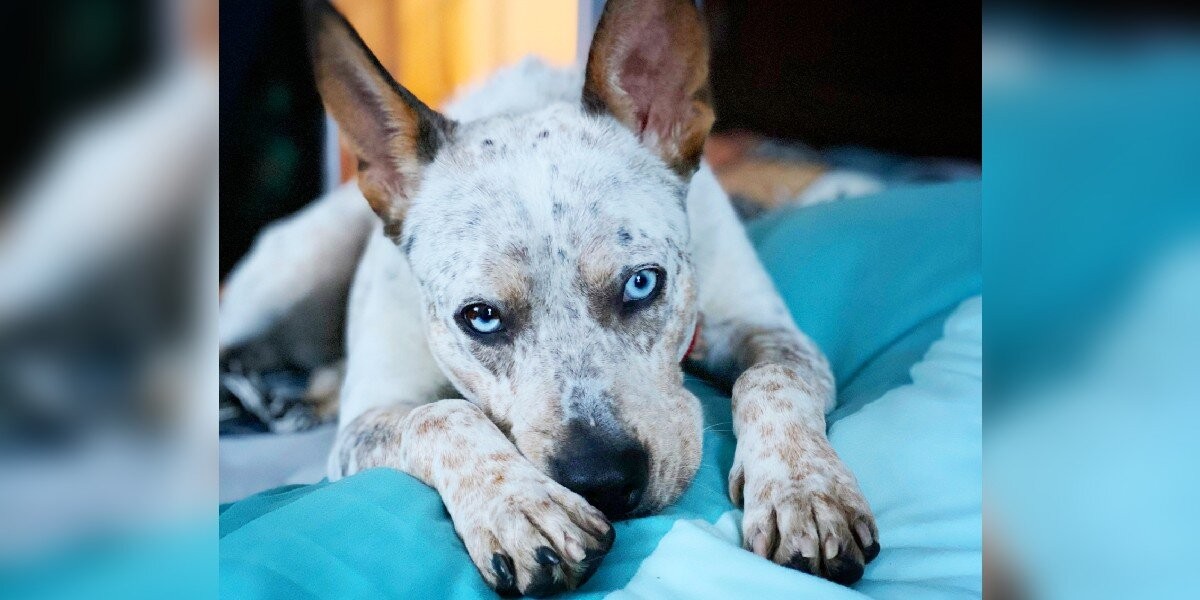
In March 2020, Carolyn Christ spotted a newspaper ad that changed everything for one overlooked dog.
A local shelter on Long Island needed foster volunteers fast because COVID-19 shutdowns had canceled upcoming adoption events.
Carolyn and her husband, John, decided to visit the shelter the very next day.
Also readHe Was Broken and Alone — Until One Gentle Dog Refused to Leave His Side
The first dog they met was Zephyr, a red heeler with striking blue eyes.
At first, Carolyn did not feel an immediate connection.
She and John spent a little time looking at other dogs while Zephyr stayed on John’s mind.
Carolyn was still unsure and hoping for some sign that they were the right fit.
Then Zephyr made the decision himself.
He climbed into Carolyn’s lap, tossed his head back, and looked up at her upside down in a playful moment she could not ignore.
That was the sign she had been waiting for.
The shelter had rescued Zephyr from Texas just two days before he was scheduled to be put down.

Before that, the roughly 1-year-old dog had been living on the streets.
As the Christs filled out foster paperwork, Carolyn noticed something on his records she was not meant to see.
The note said he had been “Returned!”
It was circled, and the explanation was painfully simple.
Someone had labeled Zephyr a “bad listener.”
Even before they understood the full story, that note stung.
Still, they brought Zephyr home as a foster and started getting to know him.
Within two days, they noticed something important.
Zephyr was not responding to commands.
He also did not react to his own name.
The issue did not seem like stubbornness or distraction.
It seemed possible that Zephyr could not hear them at all.
Carolyn and John quickly realized he was hearing impaired, though they did not yet know to what extent.
So they took him to the vet for a hearing evaluation.
During the testing, Zephyr could not pick up any pitches.
The answer was definitive.
Zephyr was completely deaf.
For Carolyn, that diagnosis was heartbreaking and clarifying at the same time.
All at once, his behavior made sense.
He had never been ignoring anyone.
He simply had not been able to hear what people were asking of him.
Carolyn was especially upset thinking about the family who had returned him.
She felt they had not taken enough time to truly know him or notice his impairment.
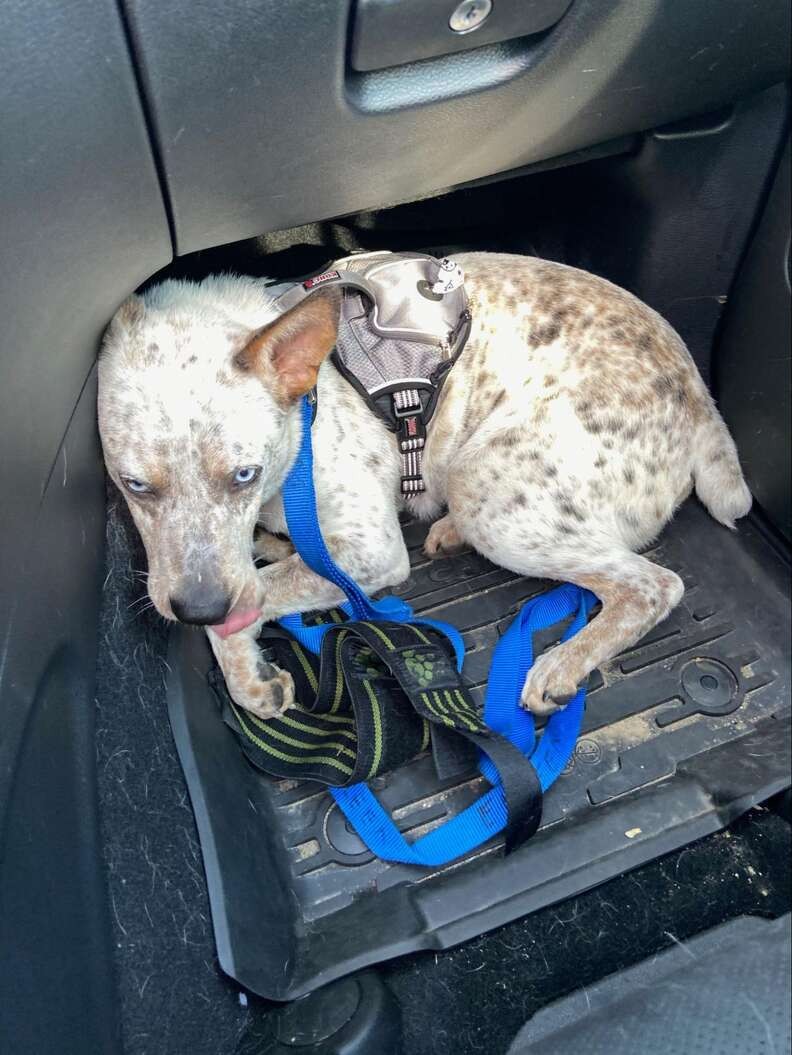
That realization only made her feel more protective of him.
So that same day, she called the shelter with a new plan.
She was no longer interested in fostering Zephyr.
She and John wanted to adopt him for good.
Just like that, Zephyr had a permanent home.
The couple, who are both special education teachers, were determined to give him the support he deserved.
They started by making a list of words and phrases that would matter in his everyday life.
Then they researched how to communicate those words using American Sign Language.
About every 10 days, they introduced a new sign.
Zephyr caught on quickly.
He now knows around 30 signs.
Some of his favorites are “dad,” “walk,” and “drive.”
The Christs also found practical ways to guide Zephyr around the house.
They use lights as signals so he can understand what they want from him.
If the backyard lights flicker twice, Zephyr knows it is time to come inside.
If he is downstairs and they want him upstairs, they flicker the staircase light.
He comes running up like clockwork.
That routine revealed something powerful about the dog once dismissed as difficult.
According to Carolyn, Zephyr is actually the best listening dog she has ever had.
Her point is simple.
Listening is not only about ears.
Zephyr is constantly checking in with his people.
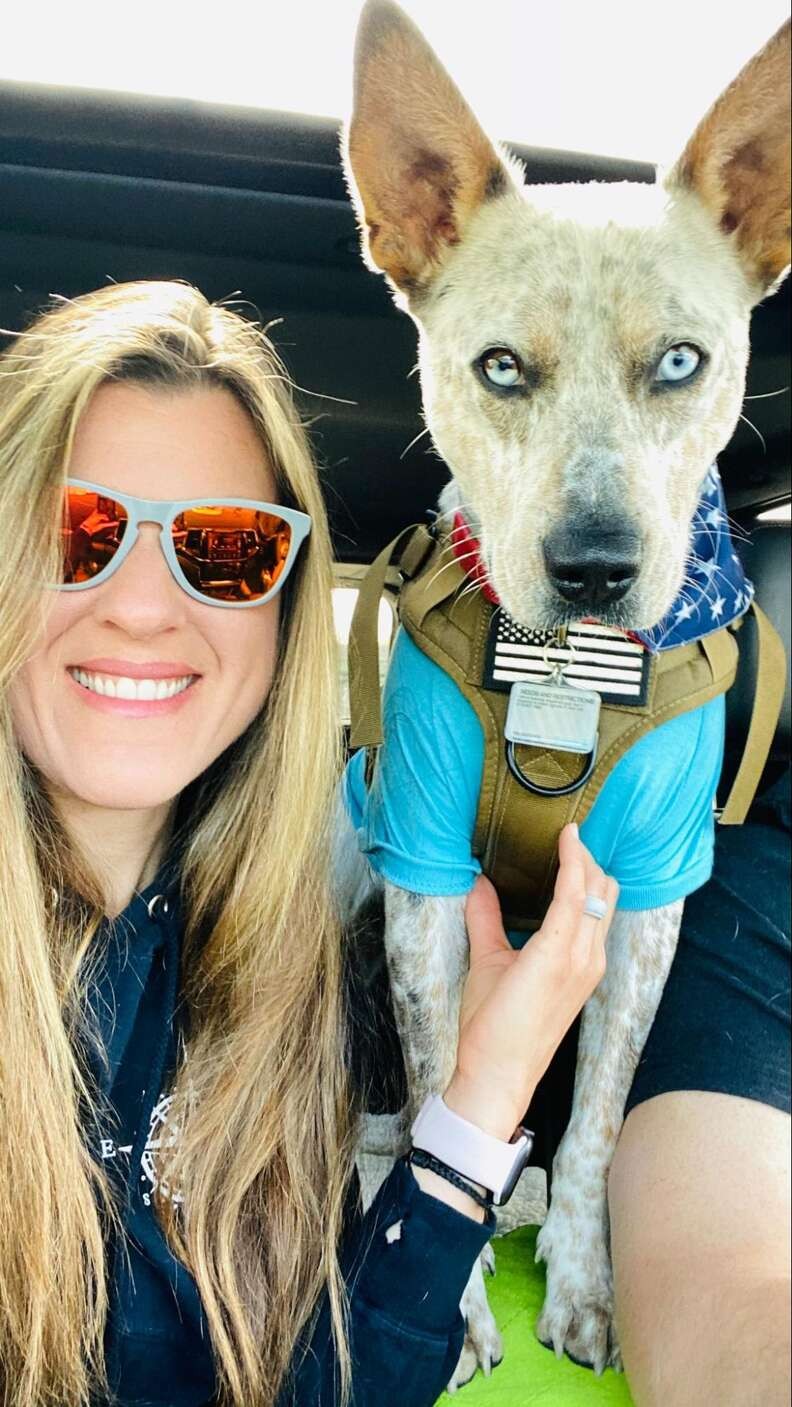
He watches their hands, faces, and expressions for direction.
He also reads body language and even lips.
Because he relies so heavily on visual cues, he stays closely tuned in to the people he loves.
Carolyn believes many people wrongly assume deaf dogs are harder to train.
Her experience with Zephyr has shown the opposite.
He is attentive, eager, and deeply connected.
In many ways, his deafness has created an even stronger bond.
There is a special kind of communication in a home where love is expressed through signs, routines, and trust.
Zephyr has also become a dog who clearly finds comfort in predictability.
He brings Carolyn her shoes and his harness when it is time for a walk.
He knows the rhythms of the house and the moments that matter.
And he has one especially endearing habit when he senses Carolyn is about to leave for work.
He hides her shoes.
The gesture is funny, but it also says a lot about how attached he has become.
A dog who once had no security now wants to hold onto it.
Each day, Zephyr also spends time perched on a cushioned windowsill, watching the world go by.
It is a quiet image, but it captures how different his life looks now.
There are no streets to survive anymore.
There is no kennel waiting for someone to misunderstand him.
There is only a home built around helping him feel safe.
Carolyn has said she feels fortunate to give Zephyr the love and stability he did not have in his first year.
That gratitude shows up in the way she talks about him.

His disability, she says, does not limit his ability to love.
If anything, it has made their connection even more remarkable.
She has described their bond as stronger than she knew was possible with an animal.
That is easy to understand when you look at the life they have built together.
Zephyr’s days are full of signs he understands, lights that guide him, and people who have learned his language.
He does not need to be changed to fit their world.
They adjusted their world so he could thrive in it.
That is what makes his story feel bigger than one adoption.
It is also a lesson in how easily animals can be misread.
A dog who does not respond the way people expect may not be defiant.
He may be confused, frightened, or living with an unseen challenge.
Zephyr was nearly defined by a label that never should have been pinned to him.
He was called a bad listener when the truth was far gentler.
He was a deaf dog waiting for someone to understand.
Carolyn hopes people will rethink their fears about adopting deaf dogs.
Some are intimidated by the idea.
They assume communication will be too hard or the dog will be too much work.
But Zephyr has shown that deaf dogs are not broken or unreachable.
They simply may need patience, creativity, and a person willing to meet them where they are.
What they give back can be extraordinary.
Zephyr listens with his eyes.
He listens with trust.
He listens by staying connected to the people who finally saw him clearly.

His story is heartbreaking in the beginning, but it does not stay there.
It turns into something warmer.
A second chance became a forever family.
A returned dog became a treasured companion.
A so-called bad listener became the dog who pays the closest attention of all.
Now, instead of being judged for what he cannot hear, Zephyr is loved for exactly who he is.
He has a family that communicates with him, protects him, and celebrates the way he moves through the world.
That is the rescue at the heart of this story.
Not that Zephyr changed.
That someone finally understood him.
And in that understanding, he found the safety, routine, and love he had been missing all along.
 Bones Waited Nearly Three Years, and Then Love Finally Stayed
 The Cold Could Not Put Out the Small Light in Harry
 The Tired Stray Who Wagged His Tail the Moment Help Arrived
 A Tired Gray Face Looked Up, And One Woman Would Not Look Away
 Two Puppy Brothers Reached Through the Bars Before Hope Ran Out
 She Would Not Leave Her Babies, Even When The Wind Grew Cruel