
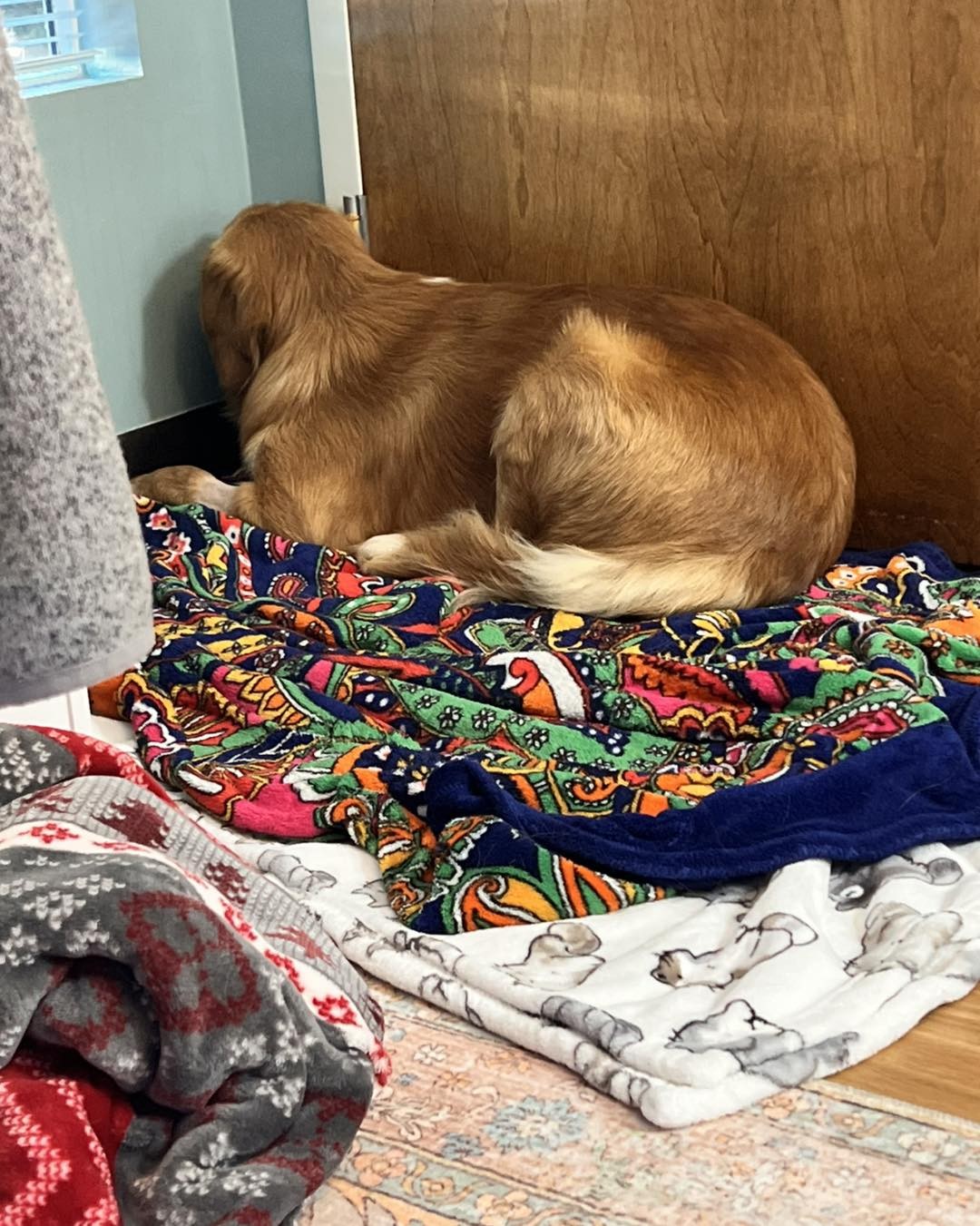
When Lenore arrived in the care of rescuers in Georgia, she did not understand that her hardest days might finally be behind her.
At 12 years old, she had never experienced the comfort of belonging to a family or living in a warm, loving home.
She had spent her life without the affection and security every dog deserves, leaving her unprepared for the people now trying to help.
Also readHeartbreaking Discovery Of A Dog Trapped In Hardened Paint And Fighting To Live
Everything around her was unfamiliar, from the voices and smells to the gentle hands reaching toward her.
For a dog who had endured so much hardship, even kindness could feel frightening.
Lenore did not greet her rescuers with curious eyes or a wagging tail.
Instead, she entered her kennel, curled tightly into a corner, and tried to make herself disappear.
Her fear was so overwhelming that hiding seemed like the only way she could protect herself.
The team at Labrador Friends of the South had hoped Lenore would begin to relax once she was safe, but she retreated even further into herself.
They soon realized that removing her from a difficult situation could not erase the pain and uncertainty she carried.
Although her body was finally safe, Lenore had not yet learned that the danger was over.
Dogs who have experienced mistreatment may struggle to understand that a soft voice or open hand is not a threat.
Lenore could not be told that her life had changed, so her rescuers would have to show her through patience and consistent care.
A trip to the veterinarian revealed just how deeply her fear ran.
Overwhelmed by the unfamiliar surroundings and people, Lenore panicked and tried to flee.
The veterinary team attempted to comfort her, but she was too frightened to understand that they wanted to help.
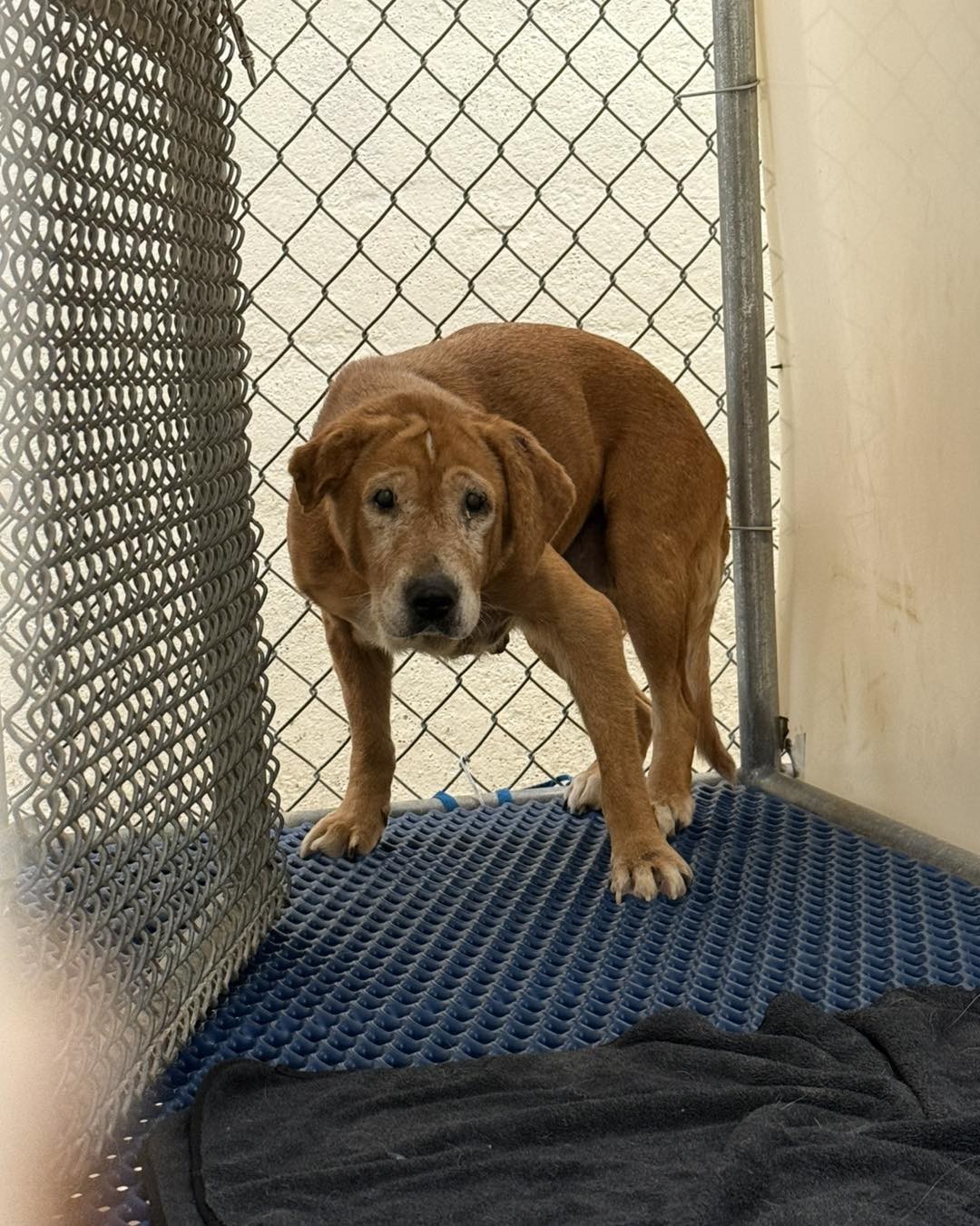
Her reaction suggested that her past had left emotional wounds that could not be measured during an examination.
The appointment also uncovered physical problems that had likely caused her considerable pain and discomfort.
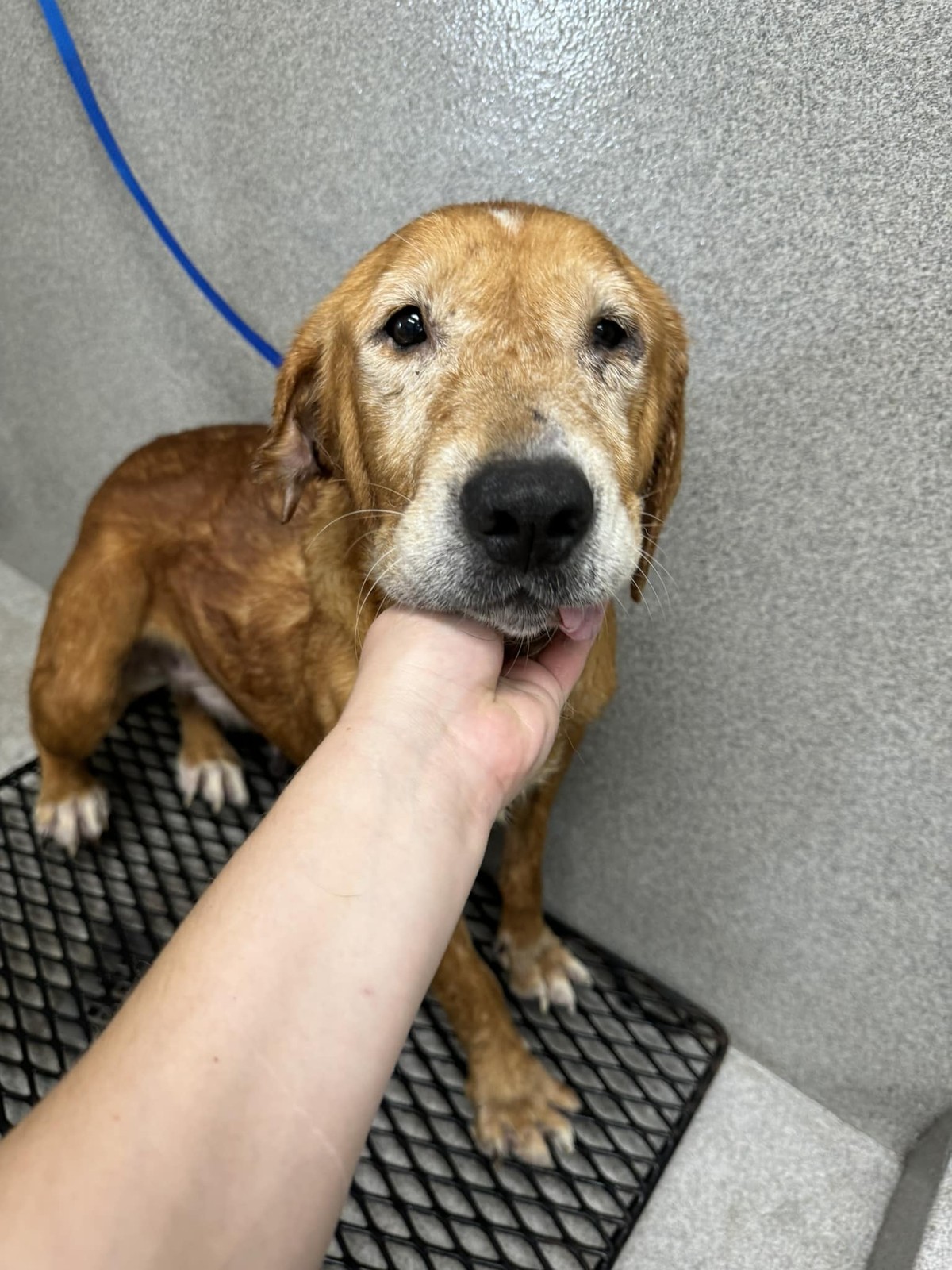
Lenore had an ear infection, worn and damaged teeth, and rough patches across her skin.
Her medical conditions could be treated, but healing them would require care and time.
Recovering emotionally would demand even more patience from someone willing to accept Lenore exactly as she was.
She was not ready to play, cuddle, or respond to affection like a dog who had always known love.
She could not promise quick progress, and attempts to rush her might only deepen her fear.
What Lenore needed most was a peaceful environment where she could begin making her own choices.
The rescue searched for a foster home capable of providing that quiet, nurturing space.
They eventually found a foster mom who was willing to welcome the fragile senior dog without asking her to change overnight.
The goal was never to force Lenore out of her crate or insist that she interact before she was ready.
Instead, her foster mom allowed the crate to remain a protected retreat where Lenore could rest and observe her new surroundings.
There were no demands that she come closer, look up, or behave like a carefree dog.
For perhaps the first time, Lenore was being allowed to decide when she felt safe enough to take another step.
Her foster mom also tried a simple way to make the home feel more peaceful.
She began playing classical music for Lenore.
The soft notes filled the room without entering Lenore’s space or requiring any response from her.
At first, her foster mom could not tell whether the music was helping.
Lenore remained cautious and withdrawn, but the gentle routine continued around her.
The music kept playing, food kept arriving, and no one tried to pull her from the place where she felt secure.
Each uneventful day offered Lenore a new lesson about life with people.
Someone could enter a room without hurting her, and a hand could approach while holding something good.
One day, that hand held a small piece of cheese.
Lenore accepted it directly from her foster mom.
Taking a piece of cheese might seem ordinary, but for Lenore it represented an extraordinary act of courage.
She had to move close enough to the person holding it and trust, if only briefly, that nothing painful would follow.
Her foster mom understood the importance of that choice and did not immediately pressure Lenore to do more.
She simply allowed the moment to be enough.
Trust rarely arrives all at once for a frightened dog, especially one who has spent 12 years without the security of a loving home.
It often appears through subtle changes such as softer breathing, a curious glance, or one careful bite of cheese.
About a week after accepting that treat, Lenore reached another milestone.
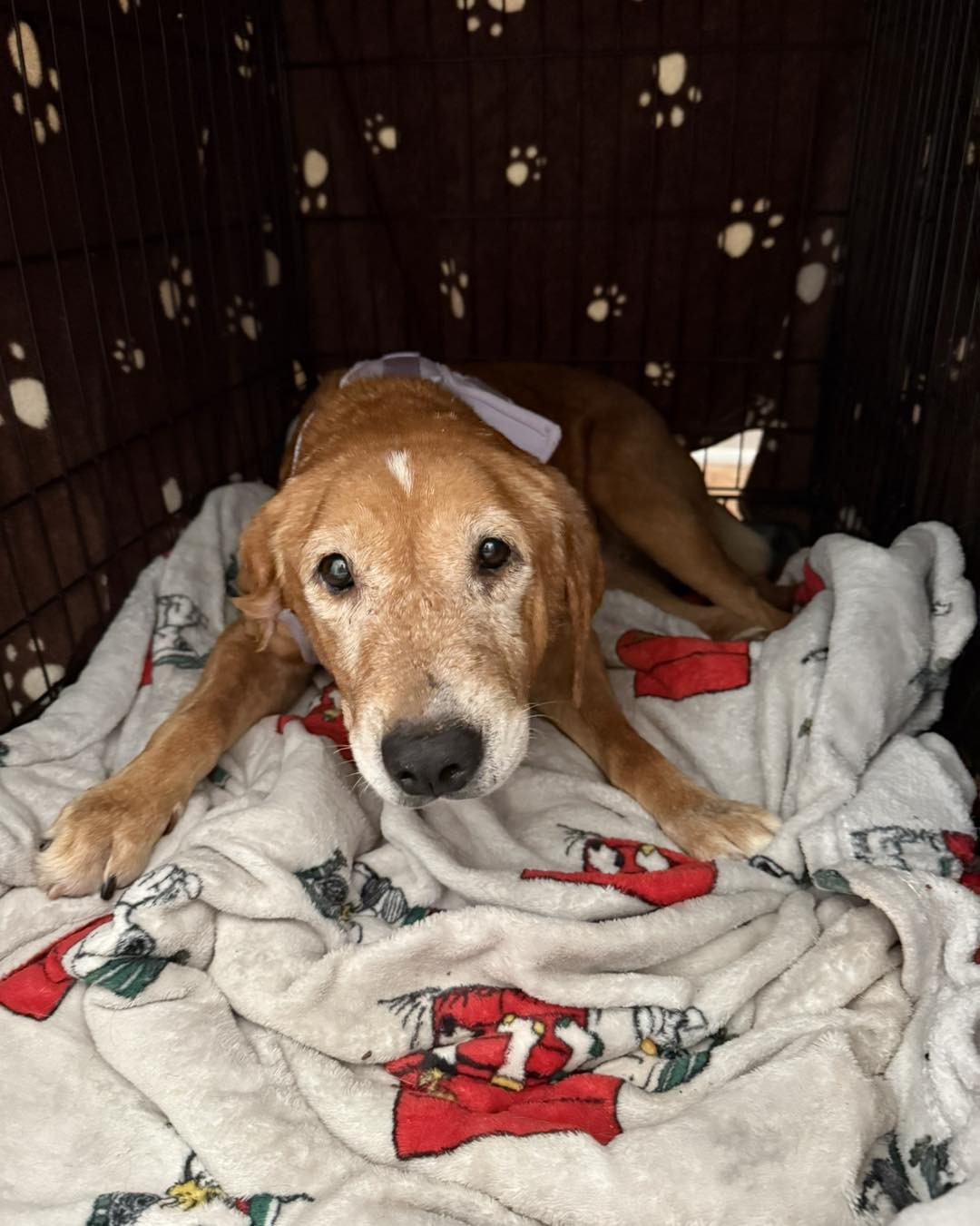
She walked out of her crate.
The crate had been her shelter from a world she did not yet understand, so leaving it meant entering the open room by choice.
No one pulled her forward or decided when the moment should happen.
Lenore made that decision herself, placing her paws beyond the spot where she had once curled up and tried to vanish.
The distance may have been short, but it marked a meaningful step toward a different life.
Other changes followed just as quietly.
Lenore had previously refused to sleep with her head facing out of the crate, keeping herself turned away from the room.
As she became more comfortable, she started resting with her head pointed outward.
That new position allowed her to watch what was happening instead of shutting it all out.
She was still wary, but curiosity was beginning to exist alongside her fear.
Then Lenore offered another small sign that something inside her was changing.
She wagged her tail.
It was only a slight wag, yet it revealed a softness her foster mom had been patiently waiting to see.
For one brief moment, Lenore’s body expressed something other than the fear that had controlled her since her rescue.
A tail wag could not erase her past or mean that she was completely healed.
It did, however, suggest that Lenore was beginning to recognize the comfort surrounding her.
Perhaps it was the classical music, a familiar voice, or the presence of the woman who never forced her to move faster.
Whatever prompted it, that tiny wag showed that trust was slowly taking root.
Her foster mom continued to follow Lenore’s pace rather than measuring her against other dogs.
There was no deadline for exploring the house, seeking affection, or behaving like a dog without a painful history.
Some days could bring a new milestone, while others might find Lenore needing the familiar protection of her crate again.
Both kinds of days were part of her recovery.
The people caring for Lenore understood that healing is rarely a straight path for an animal who has endured years of hardship.
An unfamiliar place, sudden movement, or frightening sound could still bring her old fears rushing back.
Those difficult moments would not mean that Lenore had failed or lost all of her progress.
They would simply mean that she needed more time and reassurance.
Her foster home gave her room to learn, again and again, that her new life would remain gentle.
The soft music continued to play, and patient hands kept bringing food, medicine, and care.
No one expected her to become a different dog overnight.
Lenore was accepted where she was, even when fear still prevented her from responding to love.
That kind of patience can be deeply healing because it does not depend on perfect behavior or immediate affection.
It remains close without crowding and offers comfort without demanding anything in return.
It also recognizes that stepping outside a crate can be a tremendous victory for a dog like Lenore.
Veterinary treatment could address her ear infection, damaged teeth, and skin problems, but rebuilding trust required daily tenderness.
Each peaceful meal showed her that food could arrive without fear.
Each quiet night taught her that she could rest without anticipating harm.
Every kind interaction added a safe memory to a life that had known too few of them.
Lenore remained in foster care while her recovery continued.
Her caregivers hoped that she would eventually be ready for a permanent home with someone who understood her journey.
She would need a person willing to respect her boundaries, celebrate slow progress, and recognize that fear did not mean she was incapable of love.
Senior dogs can carry years of memories into a new home, including experiences that make unfamiliar people and routines difficult to accept.
They may not immediately know how to play, ask for affection, or settle onto a soft bed.
What they need is the chance to discover that they can rest without listening for danger.
Lenore’s transformation was not defined by one dramatic moment.
It appeared in the cheese she accepted, the step she took beyond her crate, the way she turned her head toward the room, and the slight wag of her tail.
Those milestones showed that her past had wounded her without taking away her ability to heal.
At 12 years old, Lenore was finally beginning to experience the security every dog should know from the start.
She was learning that hands could bring comfort, a home could remain peaceful, and soft music could drift through the air without anything frightening following it.
Most importantly, she was discovering that she no longer had to face the world alone.
For now, Lenore can continue moving at her own pace while the people around her remain committed to helping her heal, one quiet act of kindness at a time.
 A Thin Little Dog Was Tied to a Brooklyn Fence—Then She Gave a Stranger a Kiss
 Tiny Treasure Waited Beside the Trash for a Family Who Never Came Back
 The Frightened Shelter Dog Who Became Her New Mom’s Quiet Strength
 Boyer Could Barely Reach His Shelter, Yet He Greeted His Rescuers With Kisses
 Mable Once Shook at Every Touch, but Patient Love Helped Her Feel Safe
 Trapped Beneath Thundering Hooves, But Waited for Someone to See Her